WiseGoodness participates in the Amazon Associates Program. If you purchase through these links, we may earn a commission at no extra cost to you.
This calculator provides general guidance based on published research and is not a substitute for medical advice. Vitamin D toxicity is rare but possible at very high doses (above 10,000 IU/day long-term). Always test your 25(OH)D blood level before starting high-dose supplementation. Target blood level: 40–80 ng/mL (100–200 nmol/L).
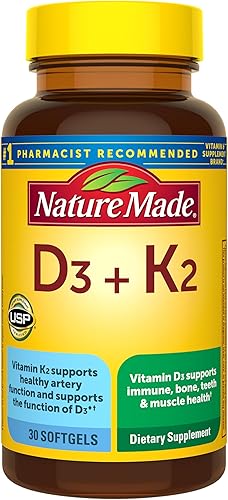
Vitamin D3 + K2 supplement — D3 for absorption, K2 to direct calcium to bones not arteries.
View on Amazon →
The standard advice to "take 1,000 IU of vitamin D" treats a deeply individual problem as if it has a universal answer. A fair-skinned person in Florida who spends an hour outside each day has completely different vitamin D physiology than a dark-skinned person in Edinburgh spending most of their time indoors. This vitamin D calculator accounts for those differences. It is not a substitute for clinical testing — a serum 25(OH)D test is the only way to know your actual status — but it gives you a meaningful estimate of where you likely stand and what supplementation dose to discuss with your doctor.
Approximately 42% of US adults are vitamin D deficient, with rates climbing to over 60% among darker-skinned populations and over 70% among adults who are obese. The consequences extend well beyond bone health: vitamin D receptors (VDRs) are found on virtually every cell in the body, and low status is associated with impaired immune function, insulin resistance, poor muscle recovery, and increased all-cause mortality.
Why Vitamin D Matters
Calling vitamin D a "vitamin" is technically a misnomer. Once synthesised in the skin or absorbed from food and supplements, cholecalciferol undergoes conversion in the liver to 25-hydroxyvitamin D (the form measured in serum tests) and then in the kidneys to 1,25-dihydroxyvitamin D — calcitriol — which is a steroid hormone. It circulates in the blood and binds to VDRs on the nuclei of cells throughout the body, directly modulating gene expression in over 200 genes.
The scope of biological function regulated by this hormone is difficult to overstate:
- Immune modulation: VDRs are expressed on every major immune cell type. Calcitriol stimulates the production of antimicrobial peptides (including cathelicidin) and regulates the inflammatory response. A landmark 2017 meta-analysis of 25 randomised controlled trials found that vitamin D3 supplementation reduced the incidence of acute respiratory tract infections by approximately 25% in deficient populations.[1]
- Metabolic effects: Vitamin D receptors are expressed in pancreatic beta cells, and low serum 25(OH)D is independently associated with impaired insulin secretion and insulin resistance. People maintaining serum levels above 40 ng/mL show measurably better glycaemic control in observational data.
- Musculoskeletal function: Beyond calcium absorption, calcitriol directly influences muscle protein synthesis and neuromuscular function. Falls risk in older adults is meaningfully reduced in trials supplementing vitamin D3 to sufficiency.
- Mood and cognition: VDRs are distributed throughout the brain. The association between low vitamin D status and depression, seasonal affective disorder, and cognitive decline is consistent across large epidemiological datasets, though causality remains under investigation.
The foundational paper on the global scale of this problem — Holick's 2007 review in the New England Journal of Medicine — estimated that over one billion people worldwide have vitamin D deficiency or insufficiency.[2] That figure has not materially improved in the years since.

Who Is at Risk
The risk profile for vitamin D deficiency is determined by a predictable intersection of biological and geographic variables. Understanding them helps clarify why the calculator gives different outputs for different inputs — and why the population-level "take 1,000 IU" advice misses most of the people who actually need more.
Skin tone and latitude: This interaction is the most consequential driver of vitamin D status. Melanin absorbs UV radiation across the same wavelengths required to convert 7-dehydrocholesterol in the skin to pre-vitamin D3. A person with darker skin at a northern latitude in winter has both reduced UV availability and reduced UV conversion efficiency. Research suggests that at 50°N latitude, a person with darker skin may need 3–6 times more sun exposure than a fair-skinned individual to produce the same amount of vitamin D3.
Northern latitudes in winter: Above approximately 50°N, the solar zenith angle between October and March is too steep for UVB radiation (290–315 nm wavelength) to penetrate the atmosphere and reach the skin in meaningful quantities. This affects the entirety of the UK, Canada, Scandinavia, northern Europe, and much of Russia for five or more months per year.
Obesity and body composition: Vitamin D3 is fat-soluble and sequesters readily in adipose tissue. At BMI above 30, effective circulating 25(OH)D is approximately 55% lower for the same supplemented dose compared to a lean individual. Meaningful supplementation doses for this group typically start at 3,000–4,000 IU/day, confirmed by serum testing.
Older adults: Cutaneous vitamin D synthesis declines substantially with age. The skin of a 70-year-old synthesises approximately 25% of the vitamin D3 of a 20-year-old under identical UV exposure conditions. Combined with reduced outdoor activity, older adults above 70 represent a high-risk group for clinically significant deficiency.
People who cover their skin: Clothing, sunscreen, and habitual indoor activity all reduce UV exposure equivalently to being at a northern latitude. A person in a warm climate who consistently covers their skin outdoors may have surprisingly low vitamin D status despite abundant sunshine.
Vitamin D3 + K2 supplement — D3 for absorption, K2 to direct calcium to bones not arteries.
View on Amazon →Vitamin D Dosage by Weight

The volume of distribution principle applies directly to fat-soluble vitamins. Because vitamin D3 is lipophilic, it distributes into adipose tissue as well as lean mass. A person weighing 100 kg has a significantly larger distribution volume than someone at 65 kg — meaning the same oral dose produces a proportionally lower serum concentration. This is the pharmacokinetic basis for why body weight matters when estimating vitamin D requirements.
The clinical implication is direct: 1,000 IU/day is insufficient for most adults above 70 kg, particularly when other risk factors (northern latitude, darker skin, minimal sun exposure) are present. The Endocrine Society's clinical practice guideline on vitamin D deficiency notes that adults may need 1,500–2,000 IU/day to maintain serum 25(OH)D above 30 ng/mL, and that individuals who are obese may require 2–3 times that dose.
For metabolic health supplements more broadly — including magnesium, berberine, and omega-3s — the same individualisation principle applies. There is no clinically meaningful population-average dose for fat-soluble micronutrients when body composition varies as widely as it does in the general population.
D3 vs D2 and the Case for Pairing with K2

D3 versus D2: Vitamin D3 (cholecalciferol) and vitamin D2 (ergocalciferol) both raise serum 25(OH)D, but they are not equivalent. D3 is the form naturally produced in human skin upon UVB exposure; D2 is derived from fungi and plant sources. Head-to-head randomised trials consistently show that D3 raises serum 25(OH)D more effectively — by approximately 87% — and maintains those levels for longer after supplementation stops, due to a longer half-life and greater potency in the hepatic conversion step. For over-the-counter supplementation, D3 (cholecalciferol) is the appropriate choice.
Why K2 matters: Vitamin D3 substantially increases intestinal calcium absorption. Vitamin K2 — specifically the MK-7 form — is the cofactor required to activate two critical proteins: osteocalcin (which incorporates calcium into bone matrix) and matrix Gla protein (which prevents calcium from depositing in arterial walls and soft tissue). The D3-K2 combination is supported by a mechanistically coherent body of evidence, and the combination is particularly relevant for anyone supplementing above 2,000 IU/day.
A daily intake of 100–200 mcg of K2 as MK-7 alongside your vitamin D3 dose is the supplementation strategy supported by the current evidence. People on anticoagulant medications (warfarin in particular) should consult their doctor before taking K2, as it can influence clotting factor activity.
If you are on GLP-1 medication and managing multiple supplements, the guide to best supplements to take on GLP-1 covers how vitamin D3 fits into a broader supplementation protocol during significant calorie restriction and rapid body composition changes.
Vitamin D3 + K2 supplement — D3 for absorption, K2 to direct calcium to bones not arteries.
View on Amazon →Frequently Asked Questions
How accurate is this vitamin D calculator?
This calculator produces a research-informed estimate based on the key variables that drive vitamin D status: skin tone (melanin concentration), sun exposure duration, latitude (UVB intensity), age, and health risk factors. It does not replace a serum 25(OH)D test, which is the only way to confirm your actual vitamin D status. Use the result as a starting point for a conversation with your doctor, not as a clinical diagnosis.
How much vitamin D do I need per day?
Daily vitamin D requirements vary significantly by individual. Official guidance from the US Endocrine Society suggests 1,500–2,000 IU/day for adults to maintain sufficiency, while the upper safe limit is 4,000 IU/day. Factors including skin tone, latitude, body weight, and sun exposure all shift individual requirements substantially. People with darker skin at northern latitudes in winter may need 3,000–4,000 IU/day to maintain serum 25(OH)D above 30 ng/mL.
Why does skin tone affect vitamin D requirements?
Melanin — the pigment responsible for darker skin — is an efficient absorber of UV radiation. While this confers photoprotection, it also reduces the skin's capacity to synthesise vitamin D3 from sunlight. Research suggests that at the same latitude, individuals with darker skin may need 3–6 times as much sun exposure to match the vitamin D synthesis rate of fair-skinned individuals.
Does latitude really affect vitamin D levels?
Yes, significantly. Above approximately 50°N (covering the UK, Canada, northern Europe, and most of Russia), UVB radiation is insufficient to drive meaningful cutaneous vitamin D synthesis for up to five months of the year — roughly October through March. Anyone living at these latitudes is essentially dependent on supplementation or dietary sources for adequate vitamin D during autumn and winter months.
Should I take vitamin D3 or D2?
Vitamin D3 (cholecalciferol) is the preferred form for supplementation. Multiple randomised trials have shown D3 raises and maintains serum 25(OH)D levels more effectively than D2 (ergocalciferol). D3 is the form naturally produced in the skin upon UVB exposure. It has a longer half-life and greater potency at raising circulating 25(OH)D. For over-the-counter supplementation, D3 is the evidence-supported choice.
Why should vitamin D3 be taken with vitamin K2?
Vitamin D3 increases calcium absorption from the gut. Vitamin K2 (in its MK-7 form) activates osteocalcin and matrix Gla protein, which direct calcium into bones and teeth rather than allowing it to deposit in soft tissue or arterial walls. When supplementing with higher doses of vitamin D3, pairing with 100–200mcg of K2 (MK-7) is a prudent safety measure. The combination is especially relevant for anyone supplementing above 2,000 IU/day. People on warfarin should consult their doctor before adding K2.
What serum vitamin D level should I aim for?
The optimal serum 25(OH)D range supported by most of the clinical literature is 40–60 ng/mL (100–150 nmol/L). Deficiency is typically defined as below 20 ng/mL (50 nmol/L). The Endocrine Society defines insufficiency as 21–29 ng/mL. Toxicity is rare and typically requires prolonged intake above 10,000 IU/day, but serum testing is strongly recommended before supplementing above 2,000 IU/day.