
The best probiotics for women contain specific, clinically studied strains — not just high CFU counts. Lactobacillus rhamnosus GG for gut and immune health, Lactobacillus reuteri for vaginal pH support, and Bifidobacterium longum for bloating and mood are the three strains with the strongest evidence for women's health. Most products on the market contain neither the right strains nor the delivery mechanism to survive stomach acid — which is where strain specificity, not CFU marketing, separates effective from useless.
Approximately 70% of your immune system lives in your gut. The probiotic industry knows this, which is why there are now more than 1,500 probiotic supplements available on Amazon alone, most of them promising to "support gut health" with 50, 100, or 500 billion CFU. Here is the part they do not tell you: most of those bacteria are dead before you swallow them. And the ones that survive your stomach acid are often strains with no evidence for the specific outcomes women are looking for.
The standard advice — take a high-CFU probiotic daily — was built on a reasonable idea about gut bacteria that turned out to be far more complicated than a pill count. The microbiome is not a uniform ecosystem. It is a dynamic, site-specific, strain-specific network where the right organism in the wrong location does nothing. A Lactobacillus acidophilus strain that performs well in a gut pH trial does not behave identically to a vaginal Lactobacillus crispatus strain in a bacterial vaginosis study. They are different organisms. CFU count does not bridge that gap.
Women's gut microbiomes are also biologically distinct from men's. Oestrogen influences microbial composition. Menstrual cycle phase shifts microbial diversity. Perimenopause drives significant changes in Firmicutes-to-Bacteroidetes ratios. A generic probiotic formulated without any of this biology in mind is not the best probiotic for women — it is the best probiotic for a hypothetical gender-neutral organism that does not exist. This article covers the mechanism behind why that matters, and which strains, in which contexts, have actual clinical evidence for women specifically.
Best Probiotics for Women: Our Top 5 Picks
Reviewed 40+ products against clinical strain evidence, CFU viability, and real-world ratings. Affiliate links below — we earn a small commission at no extra cost to you.
| Product | Best For | Key Strains | CFU | |
|---|---|---|---|---|

★ Editor's Pick
Garden of Life Dr. Formulated Women's
50B CFU · 16 Strains · Shelf-stable · Non-GMO
|
Best overall — gut, vaginal & immune | L. reuteri, L. fermentum, L. rhamnosus | 50B |
★★★★★ 4.6
55,785 reviews
|
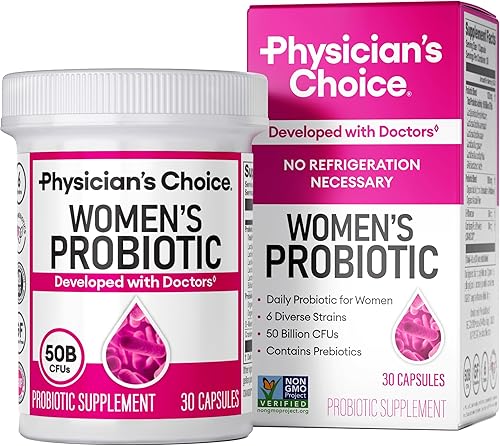
Physician's CHOICE Women's 50B
50B CFU · 6 Strains · Cranberry + prebiotics
|
pH balance & UTI defence | L. acidophilus, L. rhamnosus, B. lactis | 50B |
★★★★½ 4.4
40,000+ reviews
|
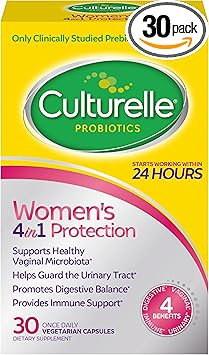
Culturelle 4-in-1 for Women
Vaginal · Digestive · Urinary · Immune
|
4-in-1 daily maintenance | L. rhamnosus GG, L. crispatus, L. reuteri | 15B |
★★★★½ 4.5
15,163 reviews
|
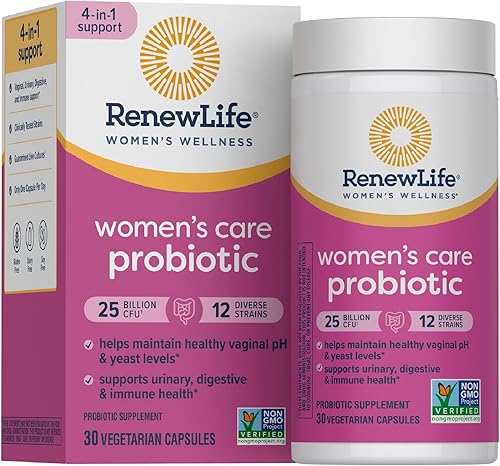
Renew Life Women's Care 25B
25B CFU · 12 Strains · Dairy-free
|
Post-antibiotic recovery | L. rhamnosus, L. acidophilus, B. longum | 25B |
★★★★☆ 4.3
15,000+ reviews
|
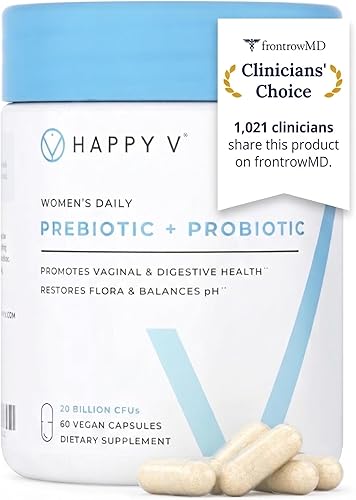
Happy V Vaginal Probiotics
Vaginal pH · Odour & itch support
|
Targeted vaginal flora | L. crispatus, L. rhamnosus GR-1, L. reuteri RC-14 | 10B |
★★★★½ 4.5
6,913 reviews
|

The Female Gut Microbiome: Why Women Are Different
The human gut microbiome contains roughly 38 trillion bacterial cells — approximately the same number as human cells in the body. But within that ecosystem, women and men differ in ways that are only beginning to be understood.
Oestrogen acts as a microbial modulator. Higher oestrogen levels correlate with greater microbial diversity and a shift toward Lactobacillus-dominant populations — the same organisms that protect both gut and vaginal pH. This is one reason why women in their reproductive years tend to have more stable Lactobacillus colonisation than post-menopausal women.
The microbiome shifts in recognisable patterns across a woman's life: during puberty (oestrogen rise), during pregnancy (dramatic Firmicutes increase, reduced diversity for immune tolerance), during postpartum recovery (rapid microbial reorganisation), and again at perimenopause (declining oestrogen drives Firmicutes dominance and reduced Lactobacillus presence). Each of these transitions creates a specific vulnerability — and a specific opportunity where a targeted probiotic has the greatest potential to help.
None of this biology appears on a probiotic label that says "50 Billion CFU." And that is the first problem with how the probiotic category is marketed to women.

How Probiotics Actually Work in the Female Body
A lot of people assume probiotics work by simply "adding good bacteria" to the gut — the way you might restock a fish tank. That is not how it works.
The gut is not empty space waiting to be filled. It is a densely occupied ecosystem where colonisation resistance — the ability of existing bacteria to prevent newcomers from establishing — is the default state. Probiotic organisms, when they survive the stomach, do not typically colonise permanently. They exert transient effects: competing for adhesion sites, producing antimicrobial peptides (bacteriocins), generating short-chain fatty acids (SCFAs) like butyrate, and directly signalling immune cells in the gut-associated lymphoid tissue (GALT).
These effects are genuinely meaningful. But they are strain-specific, not class-specific. Lactobacillus rhamnosus GG, the single most-studied probiotic strain in clinical trials, produces SCFA profiles and immune modulation effects that are not replicated by a generic acidophilus blend, even at 10 times the CFU dose. According to a systematic review published in Segers & Lebeer, 2014 — PubMed, the health effects of Lactobacillus rhamnosus GG are specifically tied to its unique adhesion proteins and spaCBA pilus structures — properties no other strain shares.
The practical implication: when you are looking at probiotics for women's health, the question is never "how many CFU?" It is always "which strain, studied in which context, with which delivery mechanism?"

Probiotics for Women Over 40: What Changes at Perimenopause
For women in their 40s and 50s, the microbiome conversation is different from the one relevant at 25 or 30 — and most probiotic marketing ignores this entirely.
As oestrogen declines in perimenopause, the gut microbiome shifts measurably. Lactobacillus populations decrease. Firmicutes increase relative to Bacteroidetes. Microbial diversity — which had been a strength in the reproductive years — narrows. These changes contribute directly to several symptoms women over 40 recognise: increased bloating, changed bowel habit, weight distribution shifts, and increased susceptibility to vaginal and urinary infections.
The vaginal microbiome is even more sensitive. In premenopausal women, vaginal flora is dominated (in healthy individuals) by Lactobacillus crispatus or Lactobacillus iners, which maintain a protective pH of 3.8–4.5. After menopause, this dominance erodes — vaginal pH rises to 5.0 or above, and susceptibility to bacterial vaginosis and UTIs increases substantially. This is not inevitable, but it does mean that women over 40 have a specific and documented need for Lactobacillus-targeted supplementation that younger women may not.
The strains most relevant here: Lactobacillus rhamnosus GR-1 and Lactobacillus reuteri RC-14, both of which have been specifically trialled for vaginal pH maintenance via oral supplementation in perimenopausal populations. General acidophilus blends have not been validated for this outcome.
If you are exploring the broader hormonal context around this transition, our perimenopause symptom checker covers the diagnostic landscape in detail.

The Strains With Actual Evidence for Women
Here is the table no probiotic brand will show you on their packaging — because it reveals how few of the strains they use have been tested for anything specific at all.
| Strain | Primary Evidence | CFU Range Studied | Verdict |
|---|---|---|---|
| L. rhamnosus GG | Diarrhoea prevention, antibiotic recovery, immune modulation, IBS | 10–40 billion | ✓ Most studied overall |
| L. reuteri RC-14 | Vaginal pH, BV reduction, urinary tract defence | 1–10 billion | ✓ Best vaginal evidence |
| L. crispatus | Dominant healthy vaginal flora; BV prevention | Variable | ✓ Vaginal-specific |
| B. longum | Bloating, IBS, mood (gut-brain axis), inflammation | 1–10 billion | ✓ Mood + digestion |
| L. acidophilus | General gut support; modest cholesterol data | 1–20 billion | ◎ Useful but overpromoted |
| S. boulardii | Antibiotic-associated diarrhoea, traveller's diarrhoea | 5–10 billion | ✓ Antibiotic recovery |
| Generic blends (unnamed strains) | No specific evidence | Any | ✗ Marketing, not medicine |
The question I always hear is: "But my probiotic has 10 strains — isn't more diversity better?" More strains is not better. More studied strains, in adequate doses, for your specific goal, is better. A probiotic with 10 poorly characterised strains at 5 billion CFU each is not more effective than one with 2 well-characterised strains at 10 billion CFU each. It is marketing numerology.

Probiotics and Vaginal Health: The Mechanism Explained
The vaginal microbiome in healthy premenopausal women is one of the least diverse ecosystems in the human body — and that low diversity is a feature, not a flaw. A healthy vaginal environment is dominated by one or two Lactobacillus species (primarily L. crispatus or L. iners) that maintain a pH between 3.8 and 4.5 through lactic acid production.
Bacterial vaginosis (BV) is not a single infection — it is the collapse of this Lactobacillus-dominated ecology, replaced by a polymicrobial community including Gardnerella vaginalis, Prevotella, and Mycoplasma species. BV affects approximately 29% of women aged 14–49 in the US, making it the most common vaginal condition — and recurrence rates after antibiotic treatment are notoriously high at 50–70% within 12 months.
This is where oral probiotics have genuine, if modest, clinical evidence. According to a 2017 review in Frontiers in Public Health, oral supplementation with Lactobacillus rhamnosus GR-1 and Lactobacillus reuteri RC-14 was associated with vaginal microbiome restoration in women with recurrent BV — a finding replicated across several randomised trials. These strains have specific adhesion proteins that allow them to survive gut transit and establish temporarily in vaginal tissue when excreted.
I would be cautious about any product claiming to specifically "restore vaginal flora" without naming those strains — GR-1 and RC-14 — explicitly on the label. Lactobacillus acidophilus is commonly substituted because it is cheaper to produce. It is not the same organism and does not have the same vaginal evidence.

Probiotics, Hormones, and the Estrobolome
The gut-hormone connection is one of the most underappreciated areas of women's health research — and one of the most directly relevant reasons why gut microbiome health matters beyond digestion.
The estrobolome is the collective term for gut bacteria that produce an enzyme called beta-glucuronidase. This enzyme deconjugates oestrogen metabolites that the liver has packaged for excretion, freeing them to re-enter circulation through enterohepatic recirculation. In a balanced microbiome, this recycling is modest and physiologically normal. In a dysbiotic gut — one with overgrowth of beta-glucuronidase-producing bacteria — substantially more oestrogen re-enters the bloodstream than the liver intended to clear.
According to Baker et al., 2017 — PubMed, disruption of the estrobolome is associated with conditions linked to oestrogen dominance, including endometriosis, hormone-receptor-positive breast cancer risk, and PCOS-related hormonal imbalance. The reverse is also supported: improving gut microbiome diversity reduces beta-glucuronidase activity and shifts oestrogen metabolism toward less potent, more readily excreted forms.
This does not mean a probiotic will "balance your hormones." That framing is too blunt. What it does mean is that improving gut microbial diversity — through a combination of fibre, fermented foods, and targeted strain supplementation — may reduce the oestrogen recycling load. This is a mechanism, not a marketing claim, and it is one reason why women with oestrogen-driven symptoms often report improvements from gut-focused interventions before they see similar changes from hormonal interventions alone.

Probiotic vs Prebiotic for Women: Which Matters More
Probiotics are live organisms. Prebiotics are the fibres those organisms eat. This is a simple distinction that most supplement marketing deliberately blurs — because "prebiotic" fibre is significantly cheaper to include in a capsule than genuinely alive, viable probiotic strains.
Probiotics
Live bacteria, specific strains, exert effects during transit and temporary colonisation. Best evidence for: antibiotic recovery, vaginal pH support, acute diarrhoea prevention, post-dysbiosis restoration. Most effective when your existing microbiome has been disrupted.
Prebiotics
Non-digestible fibres (inulin, FOS, GOS, pectin, resistant starch) that selectively feed beneficial gut bacteria. Best evidence for: sustained microbiome diversity improvement, SCFA production (particularly butyrate), reduced systemic inflammation. Most effective when your existing microbiome is intact and simply underfed.
Synbiotics (both together)
Products combining live organisms and their preferred substrates. The theory is that the probiotic arrives better-fed and more likely to temporarily establish. Evidence is promising but immature — the synbiotic advantage appears most meaningful for specific clinical conditions rather than general wellness.
For women with intact gut function who simply eat a low-fibre diet — which describes most people eating a Western diet — adding 10–15 grams of prebiotic fibre per day (from foods or supplements) will do more for their microbiome than any probiotic. The bacteria are there. They are just starving.
I take a prebiotic fibre supplement myself. Not because it clears any superfood bar — but because my fibre intake from diet alone is inconsistent, and consistent fibre intake has a more robust evidence base for gut diversity than any probiotic I have seen studied. That is not a popular take in the probiotic supplement market. It is, however, what the data shows.
For more context on how gut health fits into the broader picture of metabolic and hormonal wellness, see our guide to women's health and explore the full WiseGoodness evidence base across pillars.
Frequently Asked Questions
For digestive symptoms like bloating and irregularity, most women notice improvement within 1–4 weeks of consistent use. Vaginal pH changes from Lactobacillus supplementation can occur within 4 weeks. Immune and mood effects linked to the gut-brain axis typically take 6–8 weeks to become measurable. Probiotics are not acute interventions — they work by shifting microbial ecology over time, which means consistency matters more than dose.
For most therapeutic goals — vaginal pH support, post-antibiotic recovery, perimenopause gut changes — daily use for at least 8 weeks produces the most evidence-backed benefit. The challenge is that most probiotic strains do not permanently colonise the gut; they exert transient effects while present and disappear within 1–4 weeks of stopping. Daily use is the current standard in clinical trials that show meaningful results.
Lactobacillus crispatus is the dominant strain in a healthy vaginal microbiome and has the strongest evidence for preventing bacterial vaginosis recurrence. Lactobacillus rhamnosus GR-1 and Lactobacillus reuteri RC-14 have been specifically studied via oral supplementation reaching the vaginal tract. Look for products that specify these strains by name — generic Lactobacillus acidophilus is not an equivalent substitute for vaginal health goals.
Start probiotics the day antibiotics begin, not after the course ends. Take them 2 hours apart from your antibiotic dose so the antibiotic does not kill the probiotic organisms before they can establish. Continue for at least 4 weeks after finishing the antibiotic course. The strains with the best evidence for antibiotic-associated diarrhoea prevention are Lactobacillus rhamnosus GG and Saccharomyces boulardii — not generic acidophilus blends.
CFU count is one of the most misleading metrics in the probiotic market. Studies showing clinical benefit have used anywhere from 1 billion to 100 billion CFU — the dose that works depends entirely on the strain, not a universal number. A product with 10 billion CFU of a well-studied, properly encapsulated strain will outperform a 100 billion CFU product with strains that have no clinical evidence. Strain specificity and survival to the gut matter far more than headline CFU numbers.
The gut microbiome metabolises oestrogen through a collection of bacteria called the estrobolome. An imbalanced estrobolome can increase beta-glucuronidase activity, which deconjugates excreted oestrogen and allows it to re-enter circulation — contributing to oestrogen dominance symptoms. Improving gut diversity through diet, prebiotics, and targeted probiotics can reduce beta-glucuronidase activity, but the evidence for specific probiotic strains directly regulating oestrogen levels in humans remains preliminary.
Refrigeration is required for some strains but irrelevant for others — it depends entirely on the organism. Lactobacillus rhamnosus GG is shelf-stable in dry form. Certain Bifidobacterium strains degrade quickly without cold storage. The critical factor is not whether the product is refrigerated but whether the manufacturer provides third-party testing verifying CFU counts at the expiration date, not just at manufacture.


