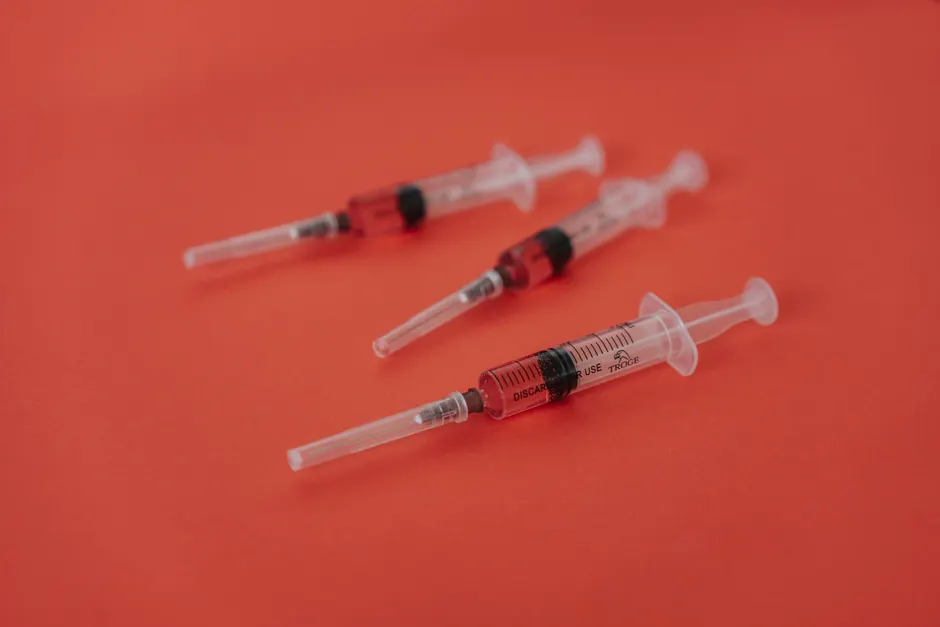
A single 1,000 mcg vitamin B12 injection can replenish liver stores enough to supply the body for weeks to months — and in some cases, for years. Serum (blood) B12 levels normalise within 2–4 weeks as B12 is redistributed to the liver. But how long the clinical effects last depends entirely on why you were deficient: dietary deficiency requires only a short course, while pernicious anemia requires monthly injections indefinitely. B12 is not a drug that wears off — it is a reserve that either gets replenished or doesn't.
Roughly 1 in 5 adults over the age of 60 have B12 levels low enough to affect nerve function — and the majority have no idea. The shot your doctor administers in 30 seconds carries one of the most misunderstood timelines in all of preventive medicine.
The standard advice when B12 comes up is to start a supplement. Your doctor may even prescribe one. But the supplement story has a fundamental flaw that gets skipped in a 10-minute appointment: if you need a B12 shot, it's almost certainly because your gut cannot absorb B12 effectively. Giving a pill to someone whose absorption pathway is compromised is like posting a letter to a sealed mailbox. The letter is fine. The delivery mechanism is the problem.
Understanding how long a B12 shot lasts requires understanding where B12 goes after it enters the body. It is not a drug that gets metabolised and excreted in days. It behaves more like a reserve commodity being deposited into a vault — and the answer to how long it lasts depends on what's in the vault to begin with, and whether the reason the vault was empty can actually be fixed. We cover the nutritional drivers of metabolic and cellular health across our Metabolic Health resource hub — and B12 is one of the markers that shows up consistently in the neurological and cardiovascular risk data.
The question I always hear is: "My doctor just said to get a shot every three months — is that right?" Sometimes yes. Sometimes that schedule is far too infrequent for the severity of the deficiency. Sometimes it's unnecessary altogether. The answer lies in the mechanism — and that's where we start.

What a B12 Shot Actually Does Inside Your Body
B12 (cobalamin) is structurally unlike any other water-soluble vitamin. It has its own dedicated absorption system in the gut — a protein called intrinsic factor, produced by parietal cells in the stomach lining — and its own long-term storage organ: the liver.
When you swallow a B12 supplement, roughly 1–2% of a large oral dose is absorbed by passive diffusion through the gut wall — no intrinsic factor required. The remaining 98% depends entirely on the intrinsic factor pathway working correctly. That pathway requires intact stomach acid production, functioning parietal cells, and a healthy terminal ileum (the section of the small intestine where intrinsic factor–B12 complexes are absorbed).
An injection completely bypasses the entire gastrointestinal system. The B12 goes directly into muscle tissue — most commonly the deltoid or gluteus — enters the bloodstream within minutes, peaks in serum 8–12 hours later, and is taken up by the liver for long-term storage.
The liver can hold between 2,000 and 5,000 micrograms of B12 — enough to supply your body's daily requirement of approximately 2.4 micrograms per day for roughly two to four years before deficiency symptoms emerge. That storage capacity is exactly why B12 deficiency takes so long to develop — and why a well-timed injection course can have effects that last for months.

How Long Does B12 Stay in Your System After an Injection?
Here is the answer most B12 guides skip, because it requires distinguishing between two different things: how long B12 stays in your serum (measurable in a blood test), and how long it stays in your body (liver stores).
In serum: cyanocobalamin — the synthetic form used in most injections — has a serum half-life of approximately 6 days. This means blood levels measurably elevated by the injection will return to baseline within about 2–4 weeks. If your doctor runs a B12 blood test four weeks post-injection and finds levels within the "normal" range, that does not mean the B12 has left your body. It means it has been redistributed.
In your body: this is where the real story is. B12 does not disappear when serum levels normalize — it moves into storage. Your liver is the long-term reservoir. According to the NIH Office of Dietary Supplements, the healthy adult body stores approximately 1,000–2,000 mcg of B12, with the majority held in the liver. A single 1,000 mcg injection can top up depleted liver stores substantially, even if blood levels normalise after a few weeks.
So when someone asks how long a B12 shot lasts, the honest answer requires knowing two things: the severity of the deficiency before the shot was given, and the underlying cause. For a vegan with dietary-only B12 deficiency, a course of injections can replenish liver stores to the point where no further shots are needed — provided the dietary gap is addressed. For someone with pernicious anemia — an autoimmune condition destroying the stomach cells that produce intrinsic factor — the oral absorption pathway is permanently blocked, and monthly injections must continue indefinitely.

How Long Until You Actually Feel the Effects?
The question I always hear from people starting B12 injections is: "Why didn't I feel anything?" The answer is almost always one of two things — you weren't actually deficient to begin with, or your symptoms had a different cause.
If you are genuinely B12 deficient, the timeline looks like this:
Energy and fatigue
Most patients with documented B12 deficiency report noticeable improvement in energy and stamina within 24–72 hours of their first injection. B12 is directly involved in red blood cell maturation — deficiency produces megaloblastic anemia, where red blood cells are enlarged and dysfunctional, unable to carry adequate oxygen. Correcting the deficiency allows normal red blood cell production to resume rapidly.
Blood markers
Measurable improvement in the blood picture — reduction in mean corpuscular volume (MCV), rise in haemoglobin — typically appears within 1–2 weeks. Full normalization of blood counts usually takes 4–8 weeks, depending on the severity of the pre-treatment anemia.
Neurological symptoms
Tingling, numbness, balance problems, and cognitive fog take the longest to resolve — weeks to months, depending on how long the deficiency persisted before treatment. Nerve damage from prolonged B12 deficiency can take 6–12 months to partially reverse, and in severe or long-standing cases may not fully resolve. This is the reason early detection matters enormously: neural recovery is time-dependent.
If you are not B12 deficient, you will feel nothing. B12 is not a stimulant. The energy boost attributed to "B12 wellness shots" in spas and IV bars is largely a placebo effect when the person's levels are already normal. That's not saying a whole lot for the wellness injection industry, is it?

How Often Should You Get B12 Shots?
This is where the one-size-fits-all narrative breaks down entirely. The frequency of B12 injections is not a generic protocol — it is a clinical variable determined by why you are deficient and how depleted your stores are.
| Cause of Deficiency | Loading Phase | Maintenance Phase | Duration |
|---|---|---|---|
| Pernicious anemia (autoimmune) | 1,000 mcg IM daily × 7 days | 1,000 mcg IM monthly | Indefinite — cause is permanent |
| Dietary deficiency (e.g., vegan) | 1,000 mcg IM daily × 7–14 days | None needed if diet corrected | Short course only |
| Gastric surgery / atrophic gastritis | 1,000 mcg IM daily × 7 days | 1,000 mcg IM monthly | Indefinite — absorption remains impaired |
| Metformin-induced depletion | Variable — based on serum B12 | Periodic monitoring + injection as needed | As long as metformin is used |
| Malabsorption (Crohn's, celiac) | 1,000 mcg IM daily × 7–14 days | Monthly — unless underlying condition resolves | Condition-dependent |
The standard loading protocol — endorsed by most clinical guidelines — is 1,000 mcg intramuscularly daily for 7 days, then weekly for a month, then monthly thereafter. This applies to all newly diagnosed deficiency regardless of cause, as rapid replenishment of stores is the priority before the maintenance protocol is individualised.
A significant clinical note: many patients with pernicious anemia on the quarterly UK NHS protocol (every 3 months) report that neurological symptoms return before the end of the 12-week interval. If this applies to you, monthly injections are clinically justified and supported by evidence — this is worth discussing with your clinician directly.

B12 Shot vs Oral Supplement — The Real Comparison
A lot of people assume that injections are always superior to oral supplements. That assumption is right in some cases and completely wrong in others. The mechanism is the deciding factor.
How oral B12 is absorbed: the dominant absorption pathway runs through intrinsic factor. Most B12 in food or supplements binds to intrinsic factor in the stomach, and this complex is then absorbed in the terminal ileum. Additionally, approximately 1% of any oral dose is absorbed passively through the gut wall, independent of intrinsic factor.
This passive absorption is the key insight. A dose of 1,000 mcg orally provides about 10–13 mcg via passive diffusion alone — well above the 2.4 mcg daily requirement. For people with normal intrinsic factor function, high-dose oral B12 works. For people whose intrinsic factor pathway is blocked, it does not replenish stores anywhere near fast enough.
According to a systematic review and meta-analysis cited in Vidal-Alaball et al. (BMJ, 2005), high-dose oral B12 was as effective as intramuscular injections at correcting B12 deficiency — but only in patients whose gut absorption capacity was intact. For pernicious anemia and confirmed intrinsic factor deficiency, injections remain the standard of care.
So the question is never "which is better in general?" The question is: what is causing your deficiency? ✓ Dietary deficiency — oral high-dose works ✗ Pernicious anemia — injections are necessary

Side Effects — What to Actually Watch For
B12 injections are among the safest interventions in clinical medicine. The vitamin is water-soluble, and any excess is excreted in urine. There is no established upper tolerable intake level for B12 because no adverse effects from high doses have been documented in human studies.
That said, a few specific effects deserve attention:
Injection site reactions Common, benign
Temporary pain, redness, and localised swelling at the injection site are normal immune responses and typically resolve within 1–2 days. Rotating injection sites helps. This is not an allergy.
Hypokalemia (low potassium) Clinically significant in severe cases
This is the side effect that catches practitioners off guard. When treating severe megaloblastic anemia, the bone marrow rapidly ramps up red blood cell production — a process that consumes potassium rapidly. Blood potassium can drop significantly during the first week of aggressive B12 treatment. Serum electrolyte monitoring is appropriate in patients with severely depleted stores or pre-existing low potassium.
Acne flares Rare, mechanism unclear
A small subset of patients report acne exacerbation after starting B12 injections. The proposed mechanism involves B12's role in sebum metabolism and skin microbiome modulation. The evidence is limited, but the effect appears real for a minority of individuals.
Allergic reactions Rare — cobalt sensitivity
True anaphylaxis to B12 injections has been reported but is exceedingly rare. The reaction is typically to cobalt — the mineral at the core of the cobalamin molecule — in individuals with pre-existing cobalt sensitivity. Routine pre-testing is not standard practice given the rarity, but it is worth mentioning a known cobalt allergy before your first injection.
People with compromised sleep architecture — a common downstream effect of untreated B12 deficiency — often find that sleep quality improves meaningfully during B12 correction. Poor sleep and B12 deficiency interact in both directions: deficiency impairs sleep, and poor sleep impairs neurotrophic recovery. For a practical guide to sleep position and airway management, see our article on the best sleeping position for sleep apnea — relevant for anyone managing both sleep and metabolic health concurrently.

B12, Brain Health, and the Longevity Connection
This is the section most B12 shot discussions skip entirely — and it may be the most important one.
B12 is one of three B-vitamins (alongside B6 and folate) that are essential for converting homocysteine into benign downstream compounds. Homocysteine is a metabolic byproduct of methionine metabolism. At elevated concentrations, it is directly toxic to blood vessels and neurons — damaging the vascular endothelium, promoting inflammation, and accelerating the rate of brain tissue loss.
When B12 is insufficient, homocysteine accumulates. This is not a subtle effect: homocysteine rises predictably as B12 falls, and elevated homocysteine is one of the most robust independent risk factors for cardiovascular disease, stroke, and accelerated cognitive decline in the research literature.
A landmark study published in the Proceedings of the National Academy of Sciences (PNAS, 2010) found that high-dose B-vitamin supplementation including B12 reduced the rate of brain atrophy in older adults with mild cognitive impairment by up to 53% in those with elevated homocysteine at baseline. That is not a marginal effect — it is a clinically significant reduction in one of the measurable drivers of dementia progression.
The Framingham Offspring Study, which followed nearly 3,000 adults over multiple years, found that approximately 39% had plasma B12 in the low-normal range — levels that don't trigger a clinical deficiency diagnosis but are low enough to allow homocysteine to drift upward. According to Selhub et al. (2000), this low-normal B12 range is the most prevalent pattern in the adult population — and the one most consistently overlooked.
Why does this happen after 50? Gastric acid production declines naturally with age — a process called hypochlorhydria. You need stomach acid to cleave B12 from dietary protein before absorption can even begin. People taking proton pump inhibitors (PPIs) for acid reflux compound this further. Metformin, one of the most commonly prescribed medications worldwide for type 2 diabetes and insulin resistance, directly impairs B12 absorption in the ileum and is estimated to cause measurable B12 depletion in up to 30% of long-term users.
One nuance worth knowing: serum B12 alone is an imperfect marker of B12 status. Methylmalonic acid (MMA) is a more sensitive early indicator — it rises when B12 is insufficient at the cellular level, often before serum B12 drops below the reference range. If you're being assessed for B12 status, ask for MMA alongside serum B12 for a more complete picture. You can also read more about how nutritional deficiencies affect visible ageing markers in our article on what vitamin deficiency causes sagging skin — B12 and its role in skin cell turnover overlaps with the same deficiency landscape.
Frequently Asked Questions
A single 1,000 mcg injection can significantly replenish liver stores — and the liver holds 2,000–5,000 mcg of B12, a 2–4 year supply at normal depletion rates. Serum B12 returns to baseline within 2–4 weeks as B12 redistributes to storage. The clinical effects last as long as liver stores remain adequate — which depends on the underlying cause of deficiency and whether it has been resolved.
In genuinely deficient patients, most report noticeable improvement in energy within 24–72 hours. Some report a change within hours, though some of this initial response may be placebo. If your B12 levels are already within the normal range, you will not feel any measurable effect — B12 does not have a stimulant mechanism and cannot boost function beyond normal levels.
Frequency is entirely cause-dependent. Pernicious anemia and permanent malabsorption require monthly injections indefinitely. Dietary deficiency with normal absorption requires only a short loading course if the dietary gap is corrected. Your clinician should determine the schedule based on your serum B12, MMA levels, and confirmed diagnosis — not a generic protocol.
For malabsorption conditions — pernicious anemia, gastric surgery, atrophic gastritis — injections are necessary because the gut cannot absorb adequate B12 regardless of dose. For dietary deficiency with intact absorption, high-dose oral B12 (1,000–2,000 mcg daily) is clinically equivalent to injections. A 2005 Cochrane-referenced BMJ review found no significant difference in outcomes between oral and intramuscular B12 when absorption capacity is preserved.
B12 injections are extremely safe. Injection-site pain and redness are the most common effects. The most clinically significant risk — hypokalemia during treatment of severe megaloblastic anemia — warrants electrolyte monitoring in severely deficient patients. Allergic reactions are rare and typically linked to cobalt sensitivity. There is no established toxicity threshold for B12 at any dose.
Most labs flag serum B12 below 200 pg/mL (148 pmol/L) as deficient. Many clinicians consider below 300 pg/mL functionally low in older adults, as neurological effects can occur within this range. A more sensitive marker is methylmalonic acid (MMA) — elevated MMA indicates cellular B12 insufficiency even when serum B12 appears within range. Both tests together give the most complete picture of B12 status.
In confirmed B12-deficient patients, yes — significantly. B12 deficiency produces megaloblastic anemia (impaired oxygen delivery) and demyelination (impaired nerve signalling), both of which directly cause fatigue and cognitive fog. Correction can restore both within days to weeks. In people with normal B12 levels, shots have no measurable effect on energy or cognition. The wellness-shot industry's energy claims are not supported by evidence in replete individuals.