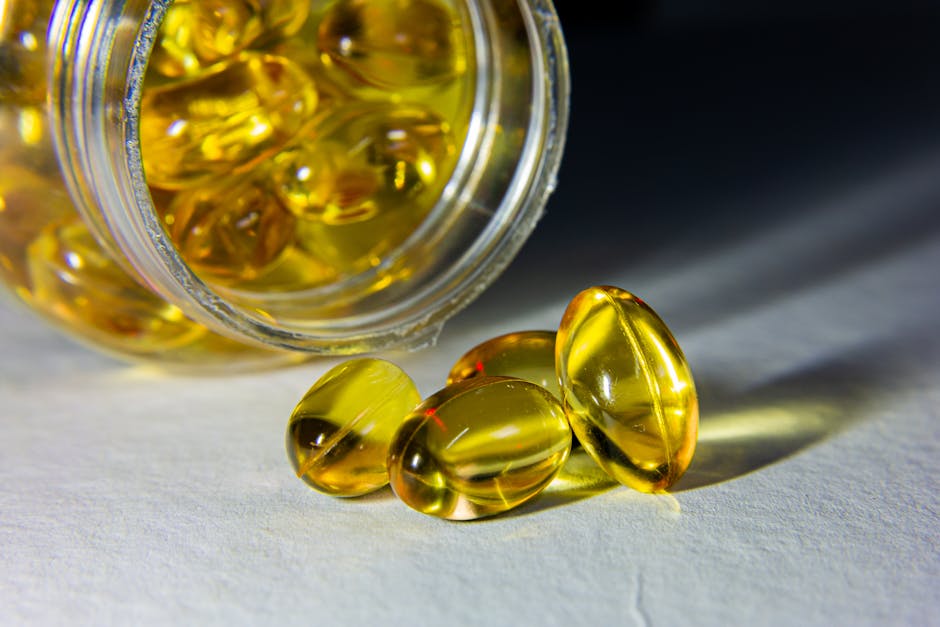
Thorne and Cymbiotika sell the same active idea — berberine for blood sugar — in two different forms. Thorne Berberine-500 uses trial-matched berberine HCl (1,500mg/day), is NSF Certified for Sport, and is the better-value option. Cymbiotika uses liposomal dihydroberberine for higher absorption at a lower dose, adds supporting compounds, and is premium-priced but isn't third-party certified. Choose Thorne for certified, evidence-matched value; choose Cymbiotika for absorption and a multi-compound formula.
Here's the thing both brands would rather you didn't notice first: the molecule doing the work is the same one. Berberine — a plant alkaloid you cannot patent — reduced HbA1c by roughly 2 percentage points in a head-to-head trial against metformin (Yin et al. 2008), the first-line diabetes drug, with no statistically significant difference between them. That trial, though, was a small 36-person pilot — promising, not the decades of outcome and safety data behind metformin — and berberine is not a substitute for a prescribed medication: if you take metformin or any blood-sugar drug, don't change it without your doctor. So a "Thorne vs Cymbiotika" decision isn't really about whether berberine does something for blood sugar. It's about which delivery of the same compound is worth your money.
The marketing frames this as a clean trade-off: Cymbiotika sells bioavailability, Thorne sells certification. As if those are two flavours of the same thing. They are not. One is a claim about how much of the compound reaches your blood. The other is a guarantee about whether the compound is even in the bottle at the dose stated. Those answer completely different questions — and conflating them is exactly how supplement marketing gets you to pay a premium for the wrong reason.
This is the comparison nobody has actually written. Search "Thorne vs Cymbiotika" and you'll find round-ups that mention both in a list of ten, and two brand pages each insisting it's the best. So we did the head-to-head: form, bioavailability, certification, price, and the honest verdict on who each one is actually for. We review Thorne and Cymbiotika individually in depth elsewhere — this is the direct fight.
This is an evidence-based comparison of two berberine forms — not medical advice, and not a recommendation to start a supplement. Berberine can interact with diabetes medication (notably metformin) and isn't suitable for everyone; talk to your doctor before taking it. How we evaluate.

Thorne vs Cymbiotika: The Two Contenders
Before the head-to-head, what each product actually is — because they're not built the same way.
Thorne Berberine-500 (and Glycemic Balance). Thorne's approach is purist. Berberine-500 is single-ingredient berberine hydrochloride, 500mg per capsule, dosed at three capsules a day to hit the 1,500mg that clinical trials validated. No delivery technology, no supporting cast — just the trial-matched compound at the trial-matched dose, produced in a facility under independent audit. Thorne also sells Glycemic Balance, a combination formula, but its berberine dose is lower; Berberine-500 is the one that maps to the evidence.
Cymbiotika Metabolic Health. Cymbiotika's approach is formulation-led. Instead of standard berberine HCl, it uses dihydroberberine — a more absorbable precursor — in a liposomal liquid, then layers on alpha-lipoic acid, Ceylon cinnamon, chromium, CoQ10, and zinc. It's a designed stack aiming for better absorption and broader metabolic coverage, delivered as a premium liquid rather than a capsule.
So the contrast is set before we score anything: Thorne bets on verified delivery of what the evidence tested. Cymbiotika bets on better delivery of an improved form, plus extras. Both bets are reasonable. They're just not the same bet.
WiseGoodness · berberine head-to-head
Thorne vs Cymbiotika — At a Glance
The same active compound, scored across the six attributes that actually decide the purchase.
Swipe to compare →
| Thorne Berberine-500 | Cymbiotika Metabolic Health | |
|---|---|---|
| Berberine form | Berberine HCl (trial-matched) | Dihydroberberine (liposomal) |
| Bioavailability | △ Standard (~5%) | ✓ Enhanced |
| 3rd-party certified | ✓ NSF for Sport | ✗ None |
| Daily dose | 1,500 mg | Lower (enhanced uptake) |
| Extra compounds | ✗ Berberine only | ✓ ALA, cinnamon, Cr, CoQ10, Zn |
| Relative cost | Lower (better value) | Higher (premium) |
| The decider | Certified, evidence-matched value | Absorption + multi-compound formula |
| Get it on Amazon |

Berberine HCl vs Dihydroberberine: The Form Difference
This is the heart of the comparison, so let's get the mechanism right. Standard berberine HCl has a real flaw: only about 5% of an oral dose actually makes it into your bloodstream. The rest is poorly absorbed or pumped back out of intestinal cells. That's not a reason it doesn't work — the trials succeeded anyway, by simply dosing high (1,500mg/day). It's a reason it sometimes causes GI upset, because a lot of unabsorbed berberine sits in the gut.
Dihydroberberine — Cymbiotika's form — is a reduced version of berberine that the gut converts back into berberine after absorption. Because it's taken up more efficiently, you can theoretically use a smaller dose to reach the same blood levels, with less of the leftover-in-the-gut problem. The mechanism is legitimate. This isn't pixie dust.
The "5× more bioavailable" claim — better than what, exactly? You'll see dihydroberberine marketed as "5 times more bioavailable than berberine." The comparison point is standard berberine HCl — a compound whose defining weakness is poor absorption. Being five times better absorbed than the worst-absorbed option is a real improvement, but the precise multiple rests on limited pharmacokinetic data, much of it industry-linked. And higher blood levels are not the same thing as a proven better metabolic outcome. The deep clinical evidence — the HbA1c reductions, the metformin comparison — was built on berberine HCl, not dihydroberberine.
So the honest scoring: ✓ Cymbiotika wins on absorption and likely on GI tolerability. ~ Thorne wins on evidence depth — its form is the one the outcome trials actually used. If your priority is "the form with the most human outcome data," that's HCl. If your priority is "absorb more, with a gentler gut," that's dihydroberberine.
Cymbiotika is the absorption-and-formula pick. Here it is on Amazon:
NSF Certification: What Only Thorne Has
Now the question the bioavailability debate quietly skips: is the compound even in the bottle, at the dose claimed, without contaminants? This is not paranoia. When the New York Attorney General DNA-tested store-brand herbal supplements in 2015, only about 1 in 5 verified the plant on the label. That investigation used DNA barcoding — a method botanical scientists fairly criticised as unreliable for processed extracts, which can contain little intact plant DNA — so treat the precise figure with caution. But the underlying point holds: the supplement industry requires no proof of purity before a product ships. The label, in an unverified product, is a marketing document — not a guarantee.
Thorne is NSF Certified for Sport. According to NSF International, that certification requires unannounced facility inspections, verification that every certified product contains what the label states at the stated dose, and screening for heavy metals, contaminants, and 280+ banned substances. Fewer than 5% of supplement brands carry it. Cymbiotika is not NSF certified — it makes its own quality claims, which may well be accurate, but they are self-reported rather than independently audited.
This is the trade-off the marketing obscures. Cymbiotika's pitch is "more of the compound reaches your blood." Thorne's pitch is "the compound is verified to be in here at all." For anyone taking other medications — where knowing exactly what you're ingesting matters for interaction safety — independent certification arguably outranks a bioavailability edge. ✓ Thorne wins decisively on verification.
Thorne is the certified, trial-matched pick. Here it is on Amazon:

Price & Value Per Therapeutic Month
At therapeutic dose, Cymbiotika Metabolic Health is the more expensive of the two, but the gap is modest — meaningful over a year, yet not the chasm the positioning implies. The question isn't which is cheaper. It's what each premium actually buys.
Thorne's premium over generic berberine buys NSF certification and trial-matched dosing. Cymbiotika's premium over Thorne buys the dihydroberberine absorption advantage, the liposomal delivery, and the four extra compounds. Whether that second premium pays off depends entirely on whether you value absorption and a multi-ingredient formula over independent certification.
One honest note that neither brand will lead with: for most people, the single biggest determinant of whether berberine "works" isn't the brand — it's whether the rest of the diet is in order. Berberine amplifies an improving metabolic environment; it doesn't rescue a poor one. We cover that mechanism in our guide to metabolic health supplements and the foundations of metabolic health. Paying up for the premium option while the underlying diet drives insulin resistance is optimising the wrong variable.

Which Should You Choose? The Verdict
There's no universal winner here, because the two products optimise for different things and both do it competently. But there is a right answer for you, and it turns on one question.
Choose Thorne if…
You want the berberine form with the deepest human outcome evidence (HCl), independently verified by the strictest certification in the industry, at lower cost. This is the better default for most people — especially anyone taking other medications, where knowing exactly what's in the bottle matters. It's the evidence-and-trust choice.
Choose Cymbiotika if…
You've had GI side effects from standard berberine, you specifically value enhanced absorption, or you want a multi-compound metabolic formula in one premium product rather than berberine alone. You're paying more, and you're trusting self-reported quality over independent certification — but the dihydroberberine angle and the supporting compounds are genuine, not gimmicks.
Our overall pick: Thorne, for the combination of trial-matched form, independent certification, and lower price. The single most important thing a supplement can do is actually contain what it claims, and Thorne is the only one of the two that proves it. Cymbiotika is the better choice for the specific reader who prioritises absorption and formula breadth and is willing to pay for it — a real use case, just a narrower one.
For the full ingredient-by-ingredient breakdown of each, see our standalone Thorne Metabolic Health review and Cymbiotika Metabolic Health review. Either way, talk to your doctor before starting berberine if you take any prescription medication — this is one supplement where the interaction risk is real, not theoretical.
Frequently Asked Questions
Both deliver clinically meaningful berberine, so the better choice depends on your priority. Thorne Berberine-500 uses berberine HCl at 1,500mg/day — the exact form and dose used in the trials that matched metformin — and is NSF Certified for Sport. Cymbiotika uses dihydroberberine in a liposomal delivery system that claims higher absorption at a lower dose. For trial-matched certainty, Thorne is the safer evidence bet; for absorption and fewer GI side effects, Cymbiotika has a plausible edge. Neither replaces dietary change.
Berberine HCl is the standard salt form used in nearly all published clinical trials — it works, but has low oral bioavailability (roughly 5%), which is why it's dosed at 1,500mg/day. Dihydroberberine is a reduced metabolite of berberine that the body converts back to berberine; it is absorbed more efficiently, so lower doses may achieve similar blood levels with less gastrointestinal upset. The trade-off: the deep clinical trial evidence sits with berberine HCl, while dihydroberberine's human outcome data is thinner.
The "5x more bioavailable" figure is widely repeated in marketing but rests on limited pharmacokinetic data, much of it industry-associated. Dihydroberberine is genuinely better absorbed than standard berberine — that part is real. But the precise multiple is not firmly established across independent human trials, and better absorption in the blood is not the same as a proven better metabolic outcome. Treat the bioavailability advantage as plausible and directional, not as a guaranteed 5x clinical benefit.
Yes — Thorne is NSF Certified for Sport, the most rigorous third-party supplement certification, held by fewer than 5% of brands. It requires unannounced facility inspections, label-accuracy verification, and contaminant and banned-substance screening. Cymbiotika is not NSF certified. In an industry where independent testing has found many products don't contain what the label claims, NSF certification is a meaningful trust signal — especially for anyone taking other medications.
At therapeutic dose, Cymbiotika is the premium option and Thorne the lower-cost one. The liposomal dihydroberberine delivery is a legitimate bioavailability angle, and the formula adds ALA, cinnamon, chromium, CoQ10, and zinc. It is worth the premium if absorption, fewer GI side effects, and a multi-compound formula matter to you. If you want the trial-matched form with independent certification at a lower cost, Thorne is the better value.
Not without physician supervision, regardless of brand. Berberine and metformin both activate AMPK and lower blood glucose through overlapping mechanisms, so combining them can cause hypoglycaemia. Berberine also inhibits the CYP3A4 enzyme, which affects the clearance of many medications including metformin. If you take metformin or any blood-sugar-lowering drug, talk to your prescribing doctor before adding berberine in any form.