The Airway Pro Sleep Apnea Relief Pillow is a contoured memory foam pillow engineered to maintain cervical alignment and encourage lateral sleeping — the two positional factors most predictive of airway patency during sleep. It is best suited to patients with position-dependent OSA (PDOSA), where AHI is at least twice as high in the supine position. Modestly priced and backed by a 60-day guarantee, it's a legitimate tool for mild-to-moderate positional apnea and an excellent CPAP complement — but not a standalone treatment for severe OSA.
CPAP abandonment rates sit at 46–83% within the first year of use. That is not a fringe statistic buried in an obscure journal. That is the documented clinical norm — confirmed across decades of compliance research, published in peer-reviewed sleep medicine literature, and largely unremarked upon in the mainstream conversation about sleep apnea treatment.
The standard medical response to an OSA diagnosis is still, almost universally, a CPAP prescription. CPAP works — when you use it. It delivers pressurised air into the airway to mechanically prevent collapse, and in compliant patients it reduces AHI to near zero. The problem is not the machine. The problem is that strapping a pressurised mask to your face and sleeping with it every night is, for a significant majority of people, something they simply stop doing. That's not a personal failing. That's a physiology problem. CPAP treats the symptom brilliantly. It does almost nothing to address why the airway collapses in the first place.
This is where positional therapy enters the picture — and where the Airway Pro Sleep Apnea Relief Pillow makes a specific, mechanically grounded claim. The claim is not that a pillow cures sleep apnea. The claim is that 56% of OSA patients have position-dependent apnea, that changing your sleep position can reduce AHI by up to 70% in those patients, and that the Airway Pro is engineered specifically to deliver that position — passively, without effort, every night. That claim is worth examining carefully. Because if it is true — and the underlying mechanism is solid — the pillow is one of the more rational sleep apnea expenditures available.
This review covers the mechanism, the features, the clinical fit, the honest pros and cons, and who should and should not spend their money here. We link out to every relevant piece of sleep apnea research and context we have on WiseGoodness's Longevity hub — so you can read the full picture before making a decision.

What Is the Airway Pro Sleep Apnea Relief Pillow?
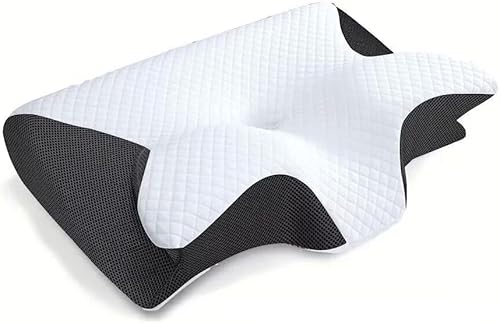
The Airway Pro is a memory foam pillow sold by SWZEC (the official Amazon retailer) specifically for people with obstructive sleep apnea, snoring, and positional sleep-disordered breathing. The 2026 version is built around a dual-contour design with a raised perimeter and a central cervical cradle that positions the skull, mandible, and cervical spine in the configuration most associated with maximum pharyngeal airway patency.
What you actually get: a premium high-density slow-rebound memory foam pillow with two distinct height zones — a taller lobe (~5.5 inches) for supine (back) sleepers, and a lower lobe (~4 inches) for lateral (side) sleepers. The central cradle is shaped to maintain the head at an angle that gently lifts the jaw forward, reducing posterior tongue displacement into the pharynx. The cover is hypoallergenic, breathable, and removable for washing.
It sits at the premium end of the sleep apnea pillow market. It comes with a 60-day money-back guarantee, which is a meaningful commercial commitment for a pillow — and one of the more honest tests of whether a company believes its product actually works.
Context: This is not a medical device — it is a therapeutic pillow. It does not require a prescription, but it works best when used within the context of a diagnosed OSA management plan.
The Science Behind Positional Therapy — Why Position Changes Your AHI
Let me give you an analogy before the mechanism. Imagine trying to water a garden through a partially kinked hose. You can increase the water pressure — that's what CPAP does. Or you can unkink the hose. That's positional therapy. The hose still has its structural characteristics. But if you keep it straight, it flows freely without needing external pressure to force water through.
The upper airway — from the soft palate through the oropharynx and hypopharynx — is a collapsible tube. It collapses when the dilator muscles that hold it open lose tone during sleep, and when gravity pulls soft tissue — specifically the tongue, soft palate, and uvula — into its lumen. The supine (back sleeping) position is the worst position for this: gravity pulls all of that tissue directly posteriorly, into the airway. The lateral (side sleeping) position shifts gravity's vector, pulling soft tissue laterally rather than into the pharynx.
According to research published by Ravesloot et al. (2013), approximately 56% of OSA patients qualify as having positional OSA — defined as an AHI at least twice as high in the supine position as in the lateral position. In these patients, changing from supine to lateral sleeping alone reduces AHI by 50–70%. That is a meaningful clinical intervention, not a marginal improvement.
Cervical extension adds another variable. When the head is positioned in slight extension — chin slightly elevated relative to the neutral position — the hypopharyngeal cross-sectional area increases by up to 20%. This is why children with OSA often sleep with their neck hyperextended: the body compensates unconsciously. The Airway Pro's central cradle is shaped to produce this extension passively, without the sleeper having to maintain it consciously.
If your snoring is noticeably worse when you sleep on your back — if your partner can tell the difference immediately — you almost certainly have positional OSA. That's the patient profile for whom the Airway Pro's mechanism is most directly validated. For context on what positional therapy can and cannot achieve, see our full evidence review of natural remedies for sleep apnea, which includes the AHI reduction data for each intervention type.

Airway Pro Features: What Your Money Actually Buys
A lot of people assume that a premium sleep-apnea pillow is just a cheap contour pillow with a marketing wrapper. That's a reasonable assumption. Let me address it directly by going through the actual feature set.
High-density slow-rebound memory foam
The Airway Pro uses high-density slow-rebound (viscoelastic) foam — not the cheaper fast-rebound foam used in standard budget pillows. Slow-rebound foam responds to body heat and pressure gradually, conforming precisely to the skull and cervical contours rather than creating pressure points. The clinical relevance: it maintains the target cervical angle throughout the night as the sleeper shifts position, rather than compressing flat under sustained load. This is not a trivial engineering distinction.
✓ Genuine quality differentiator from budget alternativesDual-height contour design
The pillow has two distinct height zones: a taller perimeter lobe for supine sleeping (approximately 5.5 inches) and a lower side lobe (approximately 4 inches) for lateral sleeping. The central cradle sits between them, positioning the head in slight extension regardless of which zone it rests in. This dual-zone approach matters because the optimal support height is genuinely different for back versus side sleeping — using the same height for both either over-supports one position or under-supports the other.
✓ Clinically considered design — not just aesthetic contouringBreathable hypoallergenic cover
The zippered outer cover is made from breathable hypoallergenic fabric — relevant for allergy-prone sleepers and anyone who runs warm at night. Overheating disrupts sleep architecture independently of OSA, so a cover that promotes airflow is more than a comfort feature. The cover is machine washable, which matters for long-term hygiene.
✓ Practical feature, not just packaging60-day money-back guarantee
SWZEC offers a 60-day money-back guarantee on the Airway Pro. For a product whose efficacy depends significantly on individual anatomy and sleep habits, 60 days is enough time to actually assess whether it works for you — especially if you track with a wearable device or home sleep test. A 30-day window is often too short to establish a consistent pattern. This is a genuine consumer protection, not a token gesture.
✓ 60 days is enough time to objectively assess improvementPrice point
Is it expensive for a pillow? Yes. Is it expensive relative to what it's trying to do? That depends entirely on whether you have positional OSA. For a patient with PDOSA who reduces their AHI by 60% from a pillow they use every night, that is among the most cost-effective sleep apnea interventions available. Compare that to CPAP: device, humidifier, masks, filters, tubing — the running cost climbs quickly within the first year, with a 50%+ chance you stop using it. The price-point criticism is valid in absolute terms. It doesn't hold up in context.
Context: High absolute cost, but rational relative to the intervention category

Who Should Buy the Airway Pro — and Who Shouldn't
The question I always hear is: "Can a pillow really help sleep apnea?" The answer is nuanced. For the right patient profile, yes — substantially. For the wrong patient profile, no. And the distinction matters more than the product itself.
✓ Best for: Positional OSA patients (PDOSA)
If your AHI is demonstrably worse in the supine position — if your bed partner hears you snore only when you roll onto your back, or if a sleep study shows position-dependent AHI variance — the Airway Pro is targeting your exact problem. You are in the 56%. The mechanism is directly applicable. This is the patient who will see the clearest, most objective improvement. If you're unsure whether you have positional OSA, our guide to best sleep positions for sleep apnea explains how to identify it and what the data shows for each position.
✓ Best for: CPAP-intolerant or CPAP-non-compliant sleepers
If you have a CPAP machine that lives in a drawer, the Airway Pro is not a medical equivalent — but it is a compliance-guaranteed alternative. A pillow you actually use every night beats a CPAP that you don't. For mild-to-moderate positional OSA, the combination of lateral sleeping plus cervical alignment can bring AHI into a clinically acceptable range without any mask, hose, or noise. The Airway Pro is not CPAP-level efficacy for severe OSA — but for mild-moderate PDOSA, it is a legitimate treatment modality.
✓ Best for: CPAP users seeking enhanced therapy
Some CPAP users find that using the Airway Pro alongside their CPAP reduces the pressure setting needed to maintain airway patency. Lower pressure settings mean less air leakage, better tolerance, and often better sleep architecture. The Airway Pro is not advertised as a CPAP complement, but the physics supports it: maintaining optimal cervical alignment reduces the external pressure needed to compensate for positional airway narrowing.
✗ Not ideal for: Severe non-positional OSA
If your OSA is severe (AHI >30) and your apnea events occur in both the supine and lateral positions at comparable frequency, positional therapy alone will not provide adequate treatment. The Airway Pro can still improve your sleep in this scenario, but it should be used as a supplement to — not a replacement for — medical treatment. Sleep apnea does not go away on its own in most cases, and undertreating severe OSA carries real cardiovascular and neurocognitive risk.
✗ Not for: Central sleep apnea or complex sleep apnea syndrome
Central sleep apnea (CSA) is driven by the brain's failure to send breathing signals during sleep — not by airway obstruction. Positional therapy has no meaningful effect on CSA. If your diagnosis is CSA or complex (mixed) sleep apnea, the Airway Pro is not the right tool. This is worth confirming with your sleep physician before purchase.

Airway Pro vs. CPAP vs. Budget Alternatives
A 2008 review by Weaver & Grunstein (2008) confirmed that the average CPAP use among prescribed patients is 4–5 hours per night — below the therapeutic minimum of 6 hours, and with a large proportion of patients using it fewer than 4 hours or not at all. The "CPAP or nothing" framing ignores this reality. The Airway Pro positions itself as a high-compliance alternative for the patients who fall through the CPAP compliance gap.
| Option | Mechanism | AHI reduction | Compliance | Best for |
|---|---|---|---|---|
| Airway Pro Pillow | Cervical alignment + lateral positioning | 50–70% (positional OSA) | Very high — passive use | Mild-moderate PDOSA |
| CPAP therapy | Continuous positive airway pressure | 80–95% (all OSA types) | Low (46–83% abandonment) | All OSA types, especially severe |
| Wedge pillow (elevation) | Upper body elevation reduces supine collapse | 20–40% | High | OSA + acid reflux / GERD |
| Standard contour pillow | Neck comfort only | Minimal | High | Neck pain; not OSA-specific |
| Oral mandibular device | Mandibular advancement | 30–50% | Medium | Mild-moderate OSA, snoring |
If you are a back sleeper with OSA who also deals with acid reflux or GERD, a wedge pillow may address both conditions simultaneously. The Kolbs Bed Wedge Pillow is the best-reviewed option in that category on Amazon — 4,359 ratings at 4.5 stars — and is FSA-eligible for documented OSA and GERD:
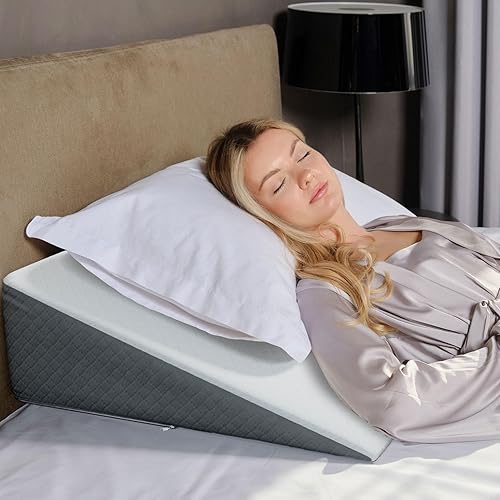
The wedge pillow approach works differently to the Airway Pro: elevation reduces supine airway collapse through gravity rather than through cervical positioning. For patients who primarily sleep on their back and cannot easily transition to side sleeping, a wedge may be a better starting point. For patients who already side-sleep, or who want to transition to lateral sleeping with maintained alignment, the Airway Pro's cervical cradle approach is more targeted.

Our Honest Verdict: Is the Airway Pro Worth It?
The NHLBI estimates that more than 936 million adults worldwide have obstructive sleep apnea. The majority are undiagnosed or inadequately treated. The majority of those prescribed CPAP don't comply with it long-term. The Airway Pro is not the solution to all of that — but it is a genuine, mechanism-grounded tool for a specific and large subset of that problem.
The product earns its 4.5-star rating on Amazon. The memory foam quality is above average for the price. The dual-height design is not superficial marketing — it reflects real biomechanical thinking about supine versus lateral sleeping geometry. The 60-day guarantee is honest. The mechanism is clinically grounded.
The limitations are also real. It cannot replace CPAP for severe non-positional OSA. It requires an adaptation period — the first 1–2 weeks on an unfamiliar pillow shape are often uncomfortable. And the efficacy is highest for patients who can confirm they have positional OSA — which requires either a sleep study or careful self-observation.
If you have diagnosed or suspected OSA with a clear positional component (snoring worse on your back, AHI confirmed higher supine), the Airway Pro is a well-made, mechanism-grounded tool worth the money. If you're a CPAP non-compliant patient with mild-to-moderate positional OSA, this may genuinely outperform the device you've already paid for — because you'll actually use it. Buy it with the intent of tracking your snoring or oxygen levels (a wearable pulse oximeter helps) and using the 60-day window to make an objective assessment. If you're unsure whether your OSA has a positional component, start with our pediatric sleep apnea screening quiz (if for a child) or discuss positional testing with your sleep physician before purchase.
Pros:
- High-density slow-rebound memory foam — maintains cervical angle throughout the night
- Dual-height design clinically considered for both back and side sleeping
- Hypoallergenic breathable cover — washable
- 60-day money-back guarantee — enough time for genuine objective assessment
- 4.5★ from 633 Amazon reviews — sustained positive response, not just launch hype
- Compatible with CPAP for combination therapy
- No noise, no device, no prescription — 100% compliance by design
Cons:
- Premium pricing — significantly more than standard pillows
- 1–2 week adaptation period required — initial discomfort is common
- Efficacy is position-dependent OSA specific — limited value for non-positional or severe OSA
- Not a standalone treatment for moderate-to-severe OSA requiring medical intervention
- No independent third-party clinical trials specific to this product
Frequently Asked Questions
No — the Airway Pro does not cure sleep apnea. It is a positional therapy tool that reduces the severity of airway collapse by maintaining cervical alignment and encouraging lateral sleeping. For patients with position-dependent OSA (PDOSA), positional therapy can reduce AHI by 50–70%. It is not a replacement for CPAP in moderate-to-severe non-positional OSA.
Yes. The Airway Pro is fully compatible with CPAP therapy. Its contoured design accommodates side sleeping — which many CPAP users prefer — and maintaining optimal cervical alignment can reduce the air pressure required to keep the airway open, potentially improving CPAP efficacy and tolerance. Some CPAP users report needing a lower pressure setting after adopting positional sleeping with an ergonomic pillow.
Most users report noticeable changes in snoring frequency and sleep quality within 1–2 weeks. Objective improvements in AHI, measurable with a home sleep test or wearable pulse oximeter, may take 4–6 weeks to accurately quantify across a consistent sleep pattern. The 60-day money-back guarantee gives you enough time to assess genuine improvement before committing.
The Airway Pro has a dual-height design with a taller lobe for back sleepers and a lower lobe for side sleepers. However, for most OSA patients, back sleeping produces the highest AHI values because gravity pulls soft tissue directly into the pharyngeal airway. The pillow's primary benefit is in supporting and maintaining lateral sleeping — it guides the sleeper into a side position through its contour geometry. Back sleeping is supported, but lateral sleeping is where the therapeutic effect is strongest.
In most adults, sleep apnea does not resolve without intervention. Weight loss can significantly reduce or eliminate OSA in obese patients. In children, adenotonsillectomy resolves OSA in more than 90% of cases. For adults with structural OSA, spontaneous resolution is uncommon. Our detailed guide on whether sleep apnea goes away covers the specific circumstances where natural resolution is possible and where medical treatment is non-negotiable.
A standard contour pillow is designed for cervical comfort — reducing neck pain and stiffness. The Airway Pro is specifically engineered around the geometry of pharyngeal airway opening: its central cradle positions the head at an angle that gently advances the mandible and opens the posterior pharyngeal space. The dual-height lobes are calibrated for supine versus lateral head positioning to maintain airway patency specifically — not just for comfort. This is a meaningful functional distinction.
Sleep apnea-related therapeutic products may be eligible for FSA/HSA reimbursement when used to treat a diagnosed condition. Eligibility depends on your plan administrator's guidelines and may require documentation from a healthcare provider. Check with your plan administrator before purchase. Some plans specifically approve positional therapy devices for patients with a confirmed OSA diagnosis.