
Magnesium glycinate is the better choice for most people: it has high bioavailability, no laxative effect, and delivers the amino acid glycine — which has independent calming and sleep-promoting effects. Magnesium citrate is better for constipation relief and short-term correction, but acts as an osmotic laxative at therapeutic doses. For sleep, insulin resistance, anxiety, and long-term metabolic health, magnesium glycinate vs citrate is not a close comparison — glycinate wins by mechanism.
Approximately 45% of US adults fail to meet the Estimated Average Requirement for magnesium — making it one of the most common nutritional gaps in the developed world. Search "magnesium supplement" and the results return confident, almost identical product claims. Which form? Most advice defaults to the cheapest and most widely available option: magnesium oxide. Absorbed at approximately 4%. That's not saying a whole lot, is it?
The magnesium glycinate vs citrate debate is the right question to be asking — because form determines everything. The mineral itself doesn't change. But the molecule it's bound to determines how much survives stomach acid, how fast it reaches the bloodstream, how it behaves in the gut, and which clinical goals it is best positioned to address. Choosing between glycinate and citrate without understanding these mechanisms is like choosing between a lock-pick and a crowbar based on which one looks nicer. Both can open a door. In different circumstances. For different reasons.
The mainstream view — that all magnesium supplements are broadly equivalent if the elemental magnesium content is the same — was built on a faulty premise. Two supplements with identical elemental magnesium content can have dramatically different bioavailability, tolerability, and clinical effect based entirely on the organic molecule they are bound to. This is not a minor biochemical footnote. It determines whether the supplement you are taking is actually working.
This article covers the mechanism behind each form, the specific contexts where glycinate outperforms citrate and vice versa, and the complete picture of which form matches which goal. We cover metabolic health in depth across our Metabolic Health resource hub — magnesium is one of the most mechanistically important interventions in that space, and it belongs here.
Magnesium Glycinate vs Citrate: Head-to-Head Product Comparison
Two forms, two specific use cases, two products with the strongest track records in each category. Here's how they compare on the factors that actually matter:
| Feature | Doctor's Best Magnesium Glycinate Editor's Pick | Natural Vitality Calm Citrate Powder |
|---|---|---|
| Product Image | 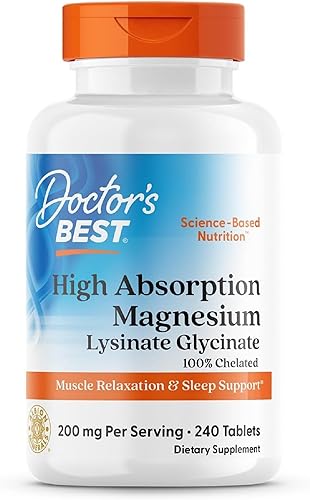 |
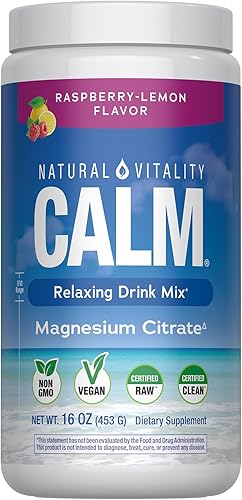 |
| Form | Magnesium Glycinate Lysinate (chelated) | Magnesium Citrate (powder) |
| Elemental Mg / Serving | 200mg (2 tablets) | 325mg (2 tsp) |
| Bioavailability | ~35–45% (amino acid transport) | ~25–35% (passive diffusion) |
| GI Effect | ✓ No laxative effect | ⚠ Osmotic laxative at higher doses |
| Secondary Benefit | Glycine — supports sleep & calm | None beyond magnesium itself |
| Best For | Sleep, insulin resistance, daily repletion, anxiety | Constipation, short-term correction, bowel prep |
| Format | Tablets (240 count) | Flavoured powder (16oz) |
| Amazon Rating | ||
| Vegan / Non-GMO | ✓ Both | ✓ Both |

Why Magnesium Deficiency Is More Common Than You Think
Formal hypomagnesaemia is defined as serum magnesium below 0.75 mmol/L. But serum magnesium is a notoriously poor proxy for body magnesium status. Only 1% of the body's magnesium is in the blood. The remaining 99% is intracellular or stored in bone. You can have significantly depleted intracellular magnesium — the type that matters for enzymatic function — while maintaining a serum level your doctor labels "normal."
The causes of depletion are systemic and structural. Modern agricultural soil has lost up to 25% of its mineral content since the 1950s — reducing the magnesium delivered by vegetables even when they are consumed in adequate quantity. Highly processed food displaces magnesium-rich whole foods. Proton pump inhibitors (among the most prescribed drug classes globally) directly impair magnesium absorption in the gut. Diuretics and alcohol increase renal magnesium excretion. Type 2 diabetes and prediabetes are associated with both increased urinary magnesium loss and reduced intestinal absorption.
The implication is almost poetically cruel: the people most likely to be deficient are exactly the people most likely to need magnesium for metabolic reasons — those on PPIs, with insulin resistance, with diabetes, or with chronic stress. This is one of the most overlooked feedback loops in metabolic health. For a full picture of how this fits into the broader metabolic framework, see our guide to what metabolic health actually means.
According to the NIH Office of Dietary Supplements, the Recommended Dietary Allowance for magnesium in adult men is 400–420mg per day and 310–320mg per day for adult women — and the average American diet delivers approximately 270–310mg. The gap is not catastrophic. But it is consistent, and it accumulates.

How Magnesium Works: The Metabolic Mechanism
Magnesium serves as a cofactor for over 300 enzymatic reactions. That number gets quoted so often it has become abstract. Let's make it concrete by focusing on the three mechanisms most directly relevant to metabolic health.
ATP activation
ATP (adenosine triphosphate) — the cell's primary energy currency — must be bound to magnesium to be biologically active. Every ATP-dependent enzymatic reaction requires the Mg-ATP complex. Without adequate intracellular magnesium, cellular energy production is impaired at the most fundamental level — before any downstream process even begins. This is why magnesium deficiency presents as fatigue long before it produces the muscle cramps or irregular heartbeats that define overt deficiency.
Insulin receptor signalling
Insulin receptor tyrosine kinase activity — the signalling step that allows cells to respond to insulin and take up glucose from the blood — requires magnesium. Intracellular magnesium depletion impairs this kinase, reducing the insulin receptor's ability to transmit its signal. This is the direct mechanistic link between magnesium deficiency and insulin resistance. It explains why population studies consistently show lower serum (and intracellular) magnesium in people with type 2 diabetes and metabolic syndrome. According to a comprehensive review by Gröber et al. (2015, Nutrients), magnesium plays a central role in glucose metabolism and its deficiency is associated with increased risk of insulin resistance and type 2 diabetes.
Neurological regulation
Magnesium acts as a voltage-dependent block in NMDA (N-methyl-D-aspartate) receptor channels — preventing excessive calcium entry into neurons. This is the mechanism behind its anxiolytic and sleep-promoting effects. Deficiency increases neuronal excitability: anxiety, hyperreactivity, difficulty sleeping. The HPA axis (the cortisol stress axis) is also magnesium-dependent — adequate magnesium inhibits excessive corticotrophin-releasing hormone release, dampening the stress response. Chronic deficiency is associated with chronically elevated cortisol.

Magnesium Glycinate: The Case for Chelation
Magnesium glycinate is magnesium bound to glycine — a non-essential amino acid. The chelation — wrapping the mineral in an organic molecule — protects it through the acidic stomach environment and allows it to be absorbed via amino acid transporters in the small intestine, rather than relying entirely on passive ion diffusion.
The practical results of this chemistry:
High bioavailability without laxative effect
Glycinate is absorbed consistently and efficiently — with bioavailability estimates ranging from 30–45% depending on the study design. More importantly, it does not draw water into the bowel at therapeutic doses. This means you can take 300–400mg of elemental magnesium glycinate daily without the loose stools or GI urgency that citrate produces at similar doses. For long-term daily supplementation — which is what therapeutic repletion requires — this is the defining advantage.
Glycine as a secondary benefit
A typical magnesium glycinate dose (200–400mg elemental magnesium) delivers approximately 900–1,800mg of glycine alongside the magnesium. Glycine activates glycine receptors in the spinal cord and brainstem with mild inhibitory, sedative effects — a mechanism distinct from and additive to magnesium's own NMDA receptor modulation. Research by Bannai & Kawai (2012, Frontiers in Neurology) demonstrated that 3g of glycine before bed significantly improved subjective sleep quality and reduced daytime sleepiness in a controlled trial. The magnesium glycinate supplement delivers roughly half that dose — useful, if not maximally therapeutic for glycine specifically.
Ideal for metabolic and hormonal goals
The GI tolerability of glycinate means it can be taken consistently at doses that actually move intracellular magnesium — 300–400mg elemental per day for 4–6 weeks. This is what matters for insulin receptor signalling improvement, HPA axis normalisation, and sustained neurological support. It also means it can be taken with meals or at night without disrupting the day.
Best for: Sleep quality, anxiety reduction, insulin resistance, long-term magnesium repletion, HPA axis support, daily use without GI disruption. See our guide to metabolic health supplements for context on how magnesium glycinate fits into a broader protocol. Glycine is also the most abundant amino acid in collagen — making magnesium glycinate a natural complement to collagen peptide supplementation for anyone targeting skin elasticity or connective tissue health.

Magnesium Citrate: The Case for Osmosis
Magnesium citrate is magnesium bound to citric acid. It is highly water-soluble and dissolves readily in the gut — which is simultaneously its clinical advantage and its main practical limitation.
Reasonable bioavailability, rapid action
Bioavailability for citrate is typically estimated at 25–35% — meaningfully better than oxide (~4%) and comparable to glycinate in healthy individuals with normal gut acid. The free citrate ions dissociate in the intestinal lumen and are absorbed by passive paracellular transport. In acute situations — rapid magnesium correction, bowel preparation, constipation treatment — citrate works reliably and quickly. This speed of action is its distinct advantage over glycinate for acute goals.
The osmotic mechanism
At moderate to higher doses, unabsorbed citrate draws water into the intestinal lumen through osmosis — acting as a stool softener and laxative. At medical preparation doses (240–300ml of 10% citrate solution), this effect is complete enough to clear the bowel for colonoscopy. At supplement doses (200–400mg elemental magnesium), the osmotic effect is milder but still present in many people — producing loose stools, GI urgency, or cramping. This is not a side effect in the traditional sense; it is the mechanism. For constipation, this is the entire point. For daily supplementation at therapeutic magnesium levels, it is a problem.
No secondary amino acid benefit
Citrate delivers no secondary active compound. Citric acid is absorbed and metabolised in the Krebs cycle — a normal metabolic process, not a therapeutic intervention. For the magnesium alone, citrate is perfectly serviceable. For the combined magnesium + neurological modulation that glycinate delivers, there is no comparison.
Best for: Constipation relief, bowel preparation, short-term acute magnesium correction, situations where rapid action is needed. People who experience no GI effects at their supplement dose may find it a cost-effective alternative to glycinate for general repletion — but for sleep, anxiety, and insulin resistance specifically, the mechanism argument clearly favours glycinate.

Magnesium Glycinate vs Citrate vs Oxide: The Full Picture
Here is the comparison most supplement brands will not put on their packaging — because it makes the cheapest form look exactly as bad as it is.
| Form | Bioavailability | Laxative Effect | Secondary Benefit | Best For | Verdict |
|---|---|---|---|---|---|
| Glycinate | ~35–45% | None at therapeutic dose | Glycine (sleep, collagen, NMDA) | Sleep, insulin resistance, daily repletion | ✓ Best overall |
| Citrate | ~25–35% | Mild–moderate | None significant | Constipation, acute correction | ◎ Specific uses |
| Malate | ~30% | None | Malic acid (Krebs cycle energy) | Fatigue, fibromyalgia, exercise recovery | ✓ Energy-focused |
| L-Threonate | High (crosses BBB) | None | Crosses blood-brain barrier | Cognitive function, neuroprotection | ◎ Premium / specific |
| Taurate | Moderate | None | Taurine (cardiovascular, GABA) | Cardiovascular health, arrhythmia risk | ◎ Cardiac-focused |
| Oxide | ~4% | Variable | None | Nothing specific — pick another form | ✗ Avoid |
Magnesium oxide deserves a direct sentence. It is the cheapest form to manufacture and the most common ingredient in mass-market multivitamins and basic supplement tablets. It lets manufacturers print a high elemental magnesium number on the label while delivering approximately 4% of it to your bloodstream. A tablet listing 400mg of magnesium oxide is delivering roughly 16mg of absorbable magnesium. You would need to take 20 of them to reach a therapeutic dose — and your bowel would object well before then. Yet it dominates the market. That is not health science; it is label science.

Which Form Is Right for Your Specific Goal
The question I always hear is: "But aren't they basically the same if I'm just trying to top up my magnesium?" For a purely numerical top-up, yes — close enough. For any specific clinical goal, no. The mechanism determines the match.
For sleep problems and anxiety
Glycinate, without question. The glycine co-delivery activates glycine receptors in the brainstem and spinal cord with mild sedative effects independent of magnesium itself. Take 300–400mg elemental magnesium as glycinate 1–2 hours before bed. The effect on sleep onset and continuity is typically noticeable within 1–2 weeks in deficient individuals.
For insulin resistance and metabolic health
Glycinate, for two reasons. First, the non-laxative profile allows consistent daily supplementation at doses that actually move intracellular magnesium — 300–400mg elemental over 4–6 weeks, which is what's needed to meaningfully improve insulin receptor function. Second, glycine has independent evidence for improving insulin sensitivity and glucose metabolism, adding to rather than duplicating the magnesium effect. Explore our GLP-1 vs Berberine calculator to see how magnesium fits alongside other metabolic interventions.
For constipation
Citrate, clearly. The osmotic mechanism is the point. Take 200–400mg elemental magnesium as citrate on an empty stomach with a full glass of water. Expect bowel movement within 30 minutes to 6 hours. For chronic daily use as a laxative, consider whether the underlying cause of constipation (low fibre, low hydration, sedentary lifestyle) is being addressed rather than symptom-managed indefinitely.
For general daily repletion on a budget
Citrate is acceptable if you tolerate it at your dose. If loose stools occur, that is your GI threshold — lower the dose or switch to glycinate. Do not use oxide. The 4% bioavailability makes it, at any reasonable dose, a trace supplement masquerading as a meaningful one.
For muscle cramps and exercise recovery
Glycinate or malate. Malate provides malic acid (a Krebs cycle intermediate) that may specifically reduce exercise-induced fatigue and muscle soreness. For general magnesium repletion in active adults without specific fatigue concerns, glycinate remains the default.
I take magnesium glycinate myself. Not because it clears any superfood marketing bar — because I sleep measurably better with consistent use, the glycine component makes sense for collagen and nervous system goals I already have, and I can take it every single night without spending the next morning reconsidering my life choices. The bar for magnesium citrate is lower. The bar for a supplement you actually take every day is not.

Magnesium Dosage, Timing, and How to Read a Label
The most common dosing error with magnesium supplements is confusing the total compound weight with the elemental magnesium content. These are not the same thing — and the gap matters.
Magnesium glycinate is approximately 14% elemental magnesium by molecular weight. A product listing "500mg magnesium glycinate" therefore contains approximately 70mg of elemental magnesium. Some products list this correctly on their labels; others bury the elemental dose in fine print. When comparing products, always compare elemental magnesium per serving, not compound weight. The tolerable upper intake level from supplements is 350mg elemental magnesium per day for adults.
Therapeutic dosing protocol
Start at 100–150mg elemental magnesium daily for 1–2 weeks — this allows the gut to adapt and identifies sensitivity. Progress to 300–400mg elemental per day after the initial period. This 4–6 week sustained dose is required to measurably shift intracellular magnesium stores. Split doses (150–200mg morning, 150–200mg evening) improve absorption compared to a single large dose.
Timing by goal
For sleep: take 300–400mg elemental as glycinate 1–2 hours before bed. The glycine component has its most pronounced sedative signalling when ingested in the evening. For insulin resistance and metabolic goals: with meals, once or twice daily — magnesium assists post-meal glucose management when present at the time of insulin signalling. For constipation (citrate): on an empty stomach with a full glass of water — the osmotic effect is fastest without food competing.
Interactions to know
Magnesium taken with food that contains phytates (whole grains, legumes) may have slightly reduced absorption — though this effect is modest with chelated forms like glycinate. Zinc competes with magnesium for absorption at very high supplemental doses; don't take both at the same time in large amounts. People with kidney disease must consult a physician before magnesium supplementation — the kidneys regulate magnesium excretion and impaired function can lead to accumulation.
For those also optimising sleep and recovery from a longevity perspective, our article on sleep apnea and its reversibility covers how magnesium fits into the broader sleep architecture picture. And for a full map of WiseGoodness evidence-based health tools, see our home page across all pillars.
Frequently Asked Questions
Magnesium glycinate is magnesium bound to glycine — an amino acid — giving it high bioavailability, no laxative effect, and a secondary benefit from glycine's calming neurological effects. Magnesium citrate is magnesium bound to citric acid — it absorbs reasonably well but acts as an osmotic agent at higher doses, drawing water into the bowel and producing a laxative effect. Glycinate is better for sleep, anxiety, and long-term metabolic repletion; citrate is better for constipation relief and short-term correction.
Magnesium glycinate is the best form for sleep. The glycine it delivers activates glycine receptors in the brain and spinal cord with mild inhibitory, sedative effects — independent of and additive to magnesium's own role in NMDA receptor regulation. Taking magnesium glycinate 1–2 hours before bed provides both the magnesium and glycine components at the time they are most clinically useful. Most people notice improvement in sleep onset within 1–2 weeks of consistent use.
Yes — there is no pharmacological reason not to combine them. However, total elemental magnesium from supplements should stay within the tolerable upper intake level of 350mg per day for adults. The more relevant question is whether combining them serves a purpose: if you need glycinate for sleep and citrate for constipation, that split is reasonable. If both are serving the same goal, choosing the better-matched single form is simpler and more cost-effective.
For acute sleep effects, magnesium glycinate taken 1–2 hours before bed may produce noticeable improvement within the first few nights in deficient individuals. For replenishing intracellular magnesium — the more meaningful long-term goal — consistent daily supplementation for 4–6 weeks is typically required. Benefits related to insulin sensitivity, stress response, and muscle function follow this same 4–6 week timeline as intracellular stores recover.
Glycinate and citrate have broadly comparable bioavailability — both significantly better than oxide. Glycinate is absorbed via amino acid transporters, giving it a consistent advantage in people with low stomach acid or malabsorption conditions. The more meaningful distinction is tolerability: glycinate has no laxative threshold, allowing consistent daily dosing at full therapeutic amounts without GI disruption — which ultimately determines whether you actually reach and sustain a therapeutic dose.
Yes — this is magnesium citrate's clearest and most evidence-supported clinical use. The osmotic mechanism draws water into the intestinal lumen, softens stool, and accelerates bowel transit. At standard supplement doses (200–400mg elemental), the effect is mild to moderate. At medical preparation doses (10–12oz of liquid citrate solution), it produces full bowel clearance for colonoscopy preparation. For routine daily constipation management, take citrate on an empty stomach with plenty of water for fastest effect.
Magnesium glycinate is the best form for insulin resistance and metabolic health. Intracellular magnesium is essential for insulin receptor tyrosine kinase activity — the step that allows cells to respond to insulin and take up glucose. Glycinate's non-laxative profile allows consistent therapeutic dosing over the 4–6 weeks needed to measurably shift intracellular stores. Glycine itself also has independent evidence for improving insulin signalling and glucose metabolism, making glycinate doubly relevant for metabolic goals.

