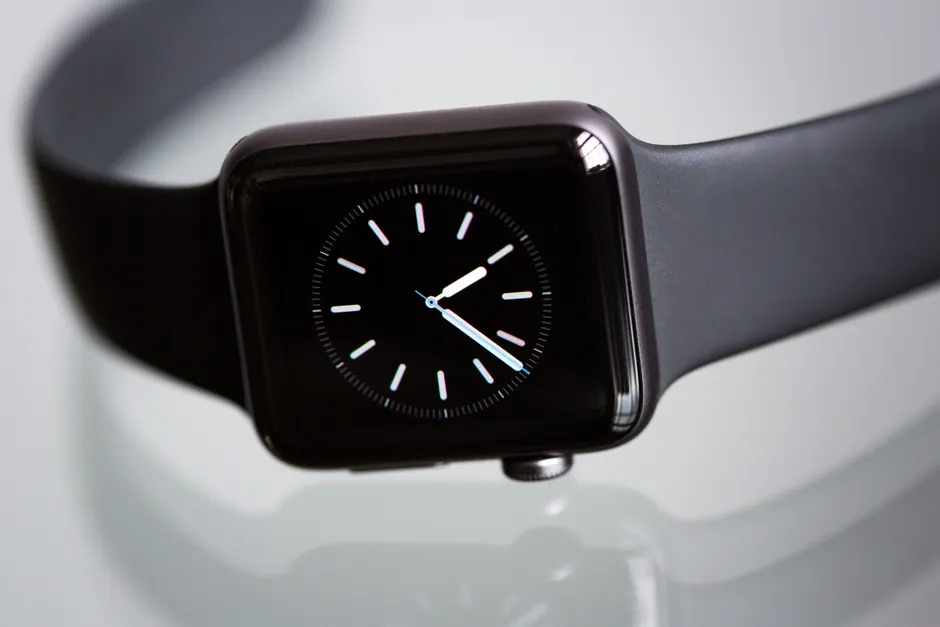
WHOOP 5.0 is the stronger choice for athletes and serious health trackers who want continuous HRV monitoring, daily recovery scores, and personalised sleep coaching. Apple Watch SE 2nd Gen (no subscription) is the better fit for general users who want a full smartwatch with solid health features and no ongoing cost. Over three years, WHOOP's recurring membership makes it far more expensive than the subscription-free Apple Watch SE — that cost difference needs to earn its keep in changed behaviour.
Four in ten people who buy a fitness wearable stop wearing it within six months. Not because the device broke. Because it did not change anything they actually noticed.
That number explains more about the WHOOP vs Apple Watch comparison than any feature list. The question is not which device tracks more data. The question is which device produces data specific enough — and actionable enough — to change a decision you make tomorrow morning.
The standard recommendation in every major technology publication puts Apple Watch at the top of every fitness wearable list because it does more. Forty workout modes. ECG. Crash detection. GPS. Cellular. An App Store with thousands of health applications. That framing misses the mechanism. A smartwatch that competes for your attention with notifications, messages, and app alerts is not optimised for health data quality. It is optimised for engagement. These are different design goals with different outcomes.
WHOOP 5.0 makes a different bet. No screen. No notifications. No way to check the time without reaching for your phone. Six sensors measuring your physiology continuously, 24 hours per day, building a personalised baseline across your first 30 days. The output each morning is a single number: your recovery score. What follows is a direct comparison — heart rate accuracy, sleep tracking, recovery monitoring, battery life, and the real 12-month cost of each device.

What WHOOP 5.0 and Apple Watch Actually Are
These are not competing products in the same category with different brand names. Understanding that distinction is more useful than any spec-sheet comparison.
Apple Watch is a smartwatch that includes health tracking. Its primary design purpose is connectivity and convenience — extending your iPhone to your wrist, enabling Apple Pay, tracking workouts with GPS, and putting notifications somewhere you cannot ignore. The health features are genuine. The ECG function on Series 4 and later has real clinical validation. But they sit alongside everything else the device is designed to do.
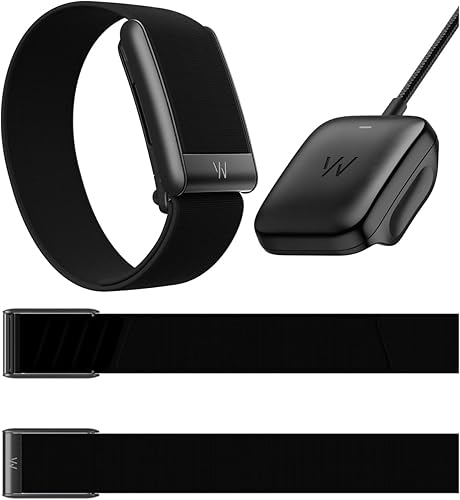
WHOOP is a health monitoring system that looks nothing like a watch. No screen. No interface. No way to interact with the device directly. It ships as a sensor pod clipped into a band, and its only job is to collect physiological data continuously, without the wearer thinking about it.
The practical consequence is this: Apple Watch typically comes off at night for charging, which removes sleep data from the period most critical for recovery tracking. WHOOP's battery pack slides onto the sensor pod and charges the device while you are wearing it — which means it never comes off. Continuous 24-hour data from a device you never remove is categorically more complete than intermittent data from a device you charge daily.
| Feature | WHOOP 5.0 | Apple Watch SE 2nd Gen |
|---|---|---|
| Display | None | Retina LTPO display |
| Heart Rate | Continuous (100 Hz) | Periodic + workout mode |
| HRV Monitoring | 24/7 continuous | Sleep only |
| Daily Recovery Score | Yes — native feature | No |
| Sleep Coaching | Yes — personalised target | Basic stages only |
| ECG | MG tier only | No (SE; Series 9+ only) |
| Blood Oxygen (SpO2) | Yes | Yes |
| GPS | No | Yes (built-in) |
| Battery Life | 14 days | 18 hours |
| Subscription Required | Yes — ongoing after Year 1 | None |
| Purchase model | Lower upfront, then recurring membership | One-time, no subscription |
| Shop on Amazon |
WHOOP 5.0 14-day battery · no screen | Apple Watch SE ★ 4.6 · 52,000+ reviews |
Neither of these designs is a flaw. One device was built for general-purpose wrist computing with health tracking added. The other was built exclusively for continuous physiological monitoring, with everything else removed. That is the frame every other comparison in this article sits within.

Heart Rate Accuracy and Sensor Architecture
Both devices use optical photoplethysmography — green light shone through the skin, with a photodetector measuring changes in blood flow as the heart beats. The sensor technology is comparable. The measurement protocol is not.
Apple Watch Series 9 takes heart rate readings every five minutes during normal use, more frequently during detected workouts, and continuously only when you specifically activate that setting. WHOOP 5.0 samples heart rate 100 times per second, continuously, regardless of what you are doing. That difference in data density has direct consequences for every derived metric — particularly heart rate variability.
HRV requires precise inter-beat interval measurements. Readings taken at five-minute intervals cannot capture the beat-to-beat variation that makes HRV clinically meaningful. WHOOP's continuous architecture produces a denser, more accurate HRV dataset, which is why its recovery scoring system is built on HRV as the primary signal rather than a secondary one.
Apple Watch has a genuine advantage in one specific area. The electrocardiogram function — available on Series 4 and later, not on the SE — generates a single-lead ECG trace. According to the Apple Heart Study, published in the New England Journal of Medicine (2019), irregular rhythm notifications identified atrial fibrillation with an 84% positive predictive value across 419,093 participants. That is a validated clinical result for a consumer device, and no other wearable has matched that scale of evidence.
The practical verdict: if you have a family history of cardiac arrhythmia and want a wearable for early detection, Apple Watch Series 9 is the more clinically validated tool for that specific purpose. WHOOP for HRV-based recovery monitoring. An Apple Watch with ECG (Series 9 or later) for ECG and cardiac rhythm detection. Apple Watch SE for general users who want heart rate and SpO2 without the ECG premium.

Sleep Tracking: Where the Biggest Difference Lives
Both devices detect sleep stages — light sleep, deep sleep, REM, awake — using the same underlying inputs: accelerometer movement data combined with heart rate. The raw detection capability is more comparable here than for HRV. The difference is in what each device does with the sleep data once it has it.
Apple Watch shows you a sleep stage chart in the Health app. It tells you how long each stage lasted and how your total sleep compares to Apple's population averages. That is useful if you want to understand what happened last night. It does not tell you what your body specifically needed last night — or how much sleep you need tonight to clear the debt from this week.
According to the CDC's adult sleep health data, 1 in 3 adults in the United States does not get sufficient sleep regularly. Sleep debt is cumulative — it does not reset with a single long night. WHOOP tracks that debt explicitly. Its Sleep Coaching feature calculates your personalised sleep need based on your recent strain load, accumulated sleep debt, and physiological markers, then scores last night's sleep as a percentage of your individual target — not someone else's average.
The question people always raise: can I just wear my Apple Watch overnight? Yes — if you charge it during the day. If you shower with it on (it is water resistant) and plug it in during that 20-minute window, you can usually maintain enough charge for overnight tracking. That workaround works until the week you fall out of the routine, which for most people arrives within a month.
For sleep data specifically: WHOOP for personalised coaching and sleep debt tracking. Apple Watch for users who build consistent charging habits and want basic sleep stage data within the Apple ecosystem.

Recovery Scores, HRV, and the Metric That Changes Behaviour
Heart rate variability is the signal WHOOP's entire recovery system is built around. HRV is the variation in milliseconds between consecutive heartbeats — not a measure of heart rate itself, but of how the autonomic nervous system is regulating the heart. Higher variability signals that the parasympathetic branch (rest and repair) is dominant. Lower variability signals physiological stress, suppressed immune response, or incomplete recovery from the previous day's effort.
WHOOP calculates your HRV nightly during slow-wave sleep, when the reading is most stable, then compares it against your rolling 30-day personal baseline. The output is your recovery score: green (ready to train hard), yellow (moderate load recommended), or red (rest or light movement only). It is not a comparison to a global average. It is a comparison to you, against your own recent history.
The research behind HRV-guided training is substantial. Reviews published in Frontiers in Physiology have consistently found that HRV-guided training produces superior performance improvements over fixed training schedules, particularly for endurance athletes. That evidence is not from WHOOP's own studies — it is from decades of sports science research on HRV as a recovery biomarker predating consumer wearables entirely.
Apple Watch measures HRV during sleep (and briefly during Breathe app sessions). The raw data appears in the Apple Health app. Apple Watch does not use that HRV data to generate a recovery recommendation. It measures the signal. It does not action it.
The question people raise at this point: "Can I not just look at my HRV in Apple Health and make the same call myself?" Technically, yes. In practice, almost no one does. The value of WHOOP's recovery score is that the analysis is already done when you pick up your phone at 6 AM. One number. Red, yellow, green. Most people are not going to open a spreadsheet before their morning coffee — and that gap between "data available" and "data actioned" is where health outcomes actually live.

Battery Life and the Wearability Trade-Off
Apple Watch SE 2nd Gen: 18 hours of standard battery life. Up to 36 hours in Low Power Mode, which disables most active health monitoring features including continuous heart rate and sleep tracking. You charge it every day.
WHOOP 5.0: up to 14 days of battery. The WHOOP Battery Pack slides onto the sensor pod and charges it while you are wearing it — no removal required, ever.
For general smartwatch use, 18 hours is workable. Charge overnight, wake up with a full device. For health tracking, 18 hours creates a structural problem. The hours Apple Watch spends charging are hours without sleep data, without HRV readings, and without baseline continuity. Three forgotten charge sessions across a week and your sleep data is patchy. WHOOP's charging architecture was designed specifically to eliminate that gap — and the difference in dataset completeness is visible in the quality of the insights each device generates.
Wearability comfort is a separate consideration. Apple Watch is a finished consumer product that fits naturally in professional and social settings. Most people do not feel self-conscious wearing it to a meeting or a dinner. WHOOP is a sensor band. Its design is clean — no screen means no visible interface element — but it reads as a fitness tracker in contexts where that may matter to you.
Neither of these is a decisive verdict. If your wrist device needs to tell the time and handle notifications, Apple Watch is the only logical choice. If you need complete, uninterrupted physiological data across all 24 hours, WHOOP's 14-day battery is not a bonus feature — it is the entire premise of the device.

Price, Subscription Costs, and the 12-Month Calculation
The sticker prices look comparable, and Year 1 costs are essentially equal — WHOOP's starter kit includes its first 12 months of membership, and the Apple Watch SE is a one-time purchase in the same ballpark.
After Month 12, the calculation changes.
WHOOP's membership continues every month after the first year. By the end of Year 2, WHOOP has cost noticeably more than its starting price — the hardware plus a full additional year of paid membership. The Apple Watch SE? Still just its one-time price. No subscription.
By the end of Year 3 the gap is stark: WHOOP has stacked two more years of membership on top of the hardware, while the Apple Watch SE has cost only its one-time price — or roughly double that if the original breaks and you buy a replacement.
The frequently repeated claim — that WHOOP is the cost-effective subscription alternative to expensive flagship smartwatches — is not accurate when you compare it against Apple Watch SE specifically. Against pricier flagships like the Apple Watch Series 9 or Ultra, WHOOP's long-term economics look different. Against the subscription-free SE specifically, WHOOP costs significantly more beyond Year 1.
This is not an argument against WHOOP. It is an argument for clarity. If WHOOP's recovery data changes how you train, recover, and sleep, the ongoing cost is straightforwardly justified. The honest question is whether you are paying for a service that changes behaviour — or paying to keep a device running that you check occasionally. Apple Watch SE for lowest total cost of ownership. WHOOP for users who engage with the data daily and modify decisions based on it.

Which One to Buy: The Verdict
Buy WHOOP 5.0 if:
You are an athlete, a serious gym-goer, or someone who wants to manage training load with precision. You track your sleep quality and want coaching toward a personalised sleep target — not a comparison to a population average. You are willing to check one number each morning and adjust your decisions accordingly. You do not need your wrist device to function as a notification hub, a payment terminal, or a way to tell the time. You can find WHOOP 5.0 on Amazon with 12 months of membership included.
Buy Apple Watch SE 2nd Gen if:
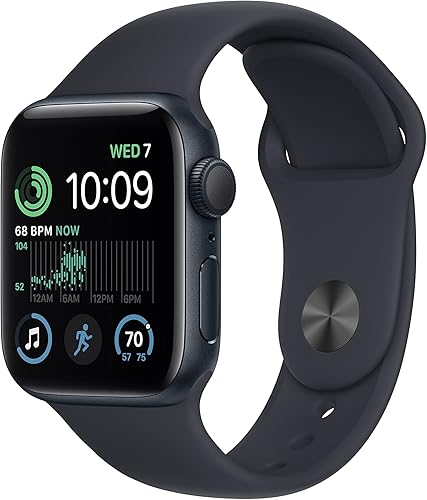
You want a general-purpose smartwatch that also tracks your health competently. You are already in the Apple ecosystem — iPhone, AirPods, iCloud — and want seamless integration. A one-time purchase with no ongoing subscription matters to your budget. The activity ring system appeals to you as a daily accountability mechanism. You can find Apple Watch SE 2nd Gen on Amazon in multiple colours and band sizes.
Consider running both:
A meaningful number of serious health enthusiasts and performance athletes wear WHOOP on one wrist and Apple Watch on the other — or run WHOOP on an upper arm via the WHOOP Body band. WHOOP handles recovery data and sleep coaching. Apple Watch handles daily smart functionality, GPS workout tracking, and notifications. The two datasets are complementary, not redundant. You can explore the full Health Wearable Finder tool on WiseGoodness to compare five leading devices across ten metrics before committing. If a different pairing is on your shortlist, we also break down Oura Ring vs Apple Watch for sleep and women's-health tracking, and Fitbit vs Garmin for GPS accuracy and battery life. And if you'd rather wear a screenless ring than a band, our guide to the best smart rings of 2026 ranks Oura, RingConn, Samsung and Ultrahuman by validated accuracy and subscription cost.
Here is what I would not recommend: buying Apple Watch because the spec sheet looks more complete than a basic fitness tracker, then never reviewing the Health app after the first week. Or subscribing to WHOOP because a high-performance athlete you follow uses it, then ignoring the recovery score when it tells you to rest. The device does not improve your health. The daily habit of looking at the data, understanding it, and responding to it does. Either device will work if you engage with it deliberately. Neither will work as a passive accessory. For a broader view of how wearables fit into long-term health technology tracking, the Health Techs pillar on WiseGoodness covers CGMs, AI diagnostics, and the full wearable landscape.
Frequently Asked Questions
For continuous 24/7 monitoring and HRV measurement, WHOOP's 100 Hz sampling rate produces more granular data than Apple Watch's periodic sampling during normal use. For workout heart rate tracking, both devices perform comparably. For cardiac rhythm detection, Apple Watch Series 9's ECG function has stronger clinical validation — confirmed through the Apple Heart Study, which enrolled 419,093 participants and found an 84% positive predictive value for atrial fibrillation detection.
For most people, no. WHOOP has no display, no GPS, no smart notifications, and cannot function as a watch. It is a health monitoring sensor, not a smartwatch. If you need a device that tells the time, handles notifications, and tracks workouts with GPS, Apple Watch is the required choice. If health monitoring is your only priority, WHOOP is purpose-built for that role.
Not natively. Apple Watch measures and displays HRV data in the Health app but does not use it to generate a daily recovery or readiness score. Third-party apps such as Athlytic can calculate recovery scores from Apple Watch HRV data, but this is not built into Apple's software. WHOOP's recovery score is a native feature calculated automatically from continuous overnight HRV monitoring, requiring no manual input.
WHOOP's starter kit includes 12 months of membership, after which the subscription continues on an ongoing monthly basis. Because that fee recurs every year, WHOOP's three-year cost climbs well above its modest starting price. Apple Watch SE 2nd Gen has no subscription, so its three-year cost is essentially just the one-time purchase (plus an optional replacement). The cost gap widens with each year of WHOOP membership.
WHOOP provides more actionable sleep analysis for most users. Its Sleep Coaching feature calculates a personalised sleep need based on your strain load and accumulated sleep debt — not a generic eight-hour target — and scores each night as a percentage of your individual figure. Apple Watch shows sleep stage data but does not generate personalised sleep targets or track cumulative debt across multiple nights. Both require overnight wear; WHOOP's battery makes this easier to maintain without discipline.
The subscription is worth it if you check your recovery score every morning and modify your training or rest decisions based on what you see. HRV-guided training has a well-established evidence base for improving performance outcomes — but only when the data is actively used. If you are unlikely to engage with the app daily, Apple Watch SE, with no ongoing cost, is the more practical long-term option.
Yes. Many athletes and health enthusiasts wear both simultaneously — WHOOP on one wrist or via the WHOOP Body accessory on an upper arm, Apple Watch on the other. The two devices collect complementary data: WHOOP for recovery and sleep coaching, Apple Watch for smart functionality and GPS workout tracking. There is no technical conflict between them, and the datasets do not overlap in ways that create confusion.