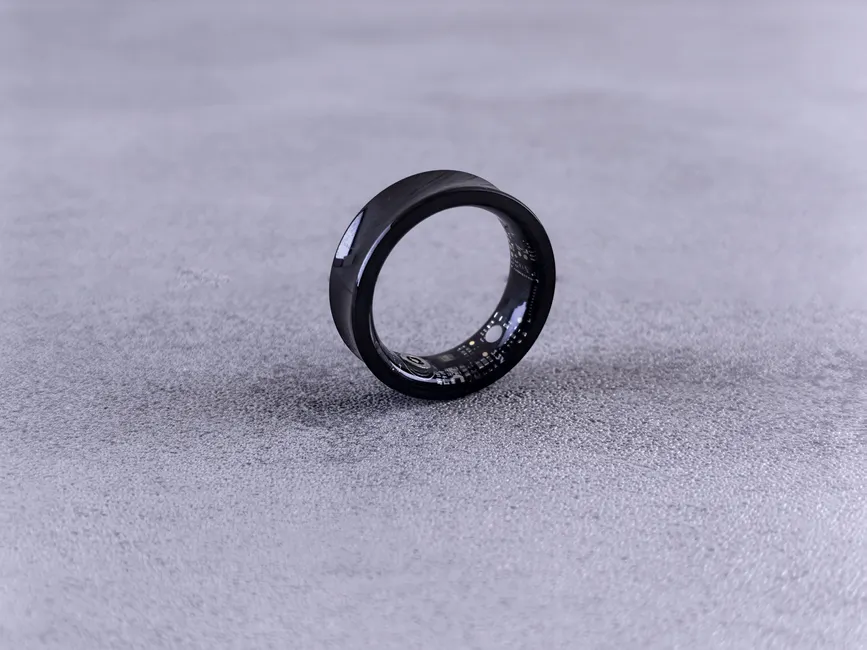
The best smart ring overall is the Oura Ring 4 — it has the most independent validation and the most polished app, though it's the only major ring that still charges a subscription. For the best value, the RingConn Gen 2 pairs a 10–12 day battery with zero subscription. Samsung Galaxy Ring is best inside the Samsung/Android world, Ultrahuman Ring AIR is the best subscription-free premium pick, and the Amazfit Helio Ring is the budget entry point. Which is "best" depends entirely on your goal — so we've matched each ring to the buyer it actually fits.
Here's the uncomfortable truth about most "best smart ring" lists: they rank the rings the reviewer happened to like, assert that one is "the most accurate," and quietly skip the part where the accuracy was never independently tested.
We're going to do this differently. WiseGoodness is research-led, not a hands-on lab — so rather than tell you we wore twelve rings for a year (we didn't), we did something more useful: we read the published validation studies, compared the specs that actually settle a decision, and weighed the patterns in thousands of owner reviews. You can read exactly how we evaluate products before you trust a single recommendation here.
Because the honest headline is this: there is no single best smart ring. There's a best ring for sleep validation, a best ring for battery and value, a best ring for Android users, and a best ring for a tight budget — and they are not the same ring. The mistake is buying the most-hyped option and discovering it was optimised for someone whose priorities aren't yours.
So start with the goal, not the gadget. The map below routes you straight to the right pick. Then we'll get into why — the sensor science, what the validation studies actually found, the subscription math nobody likes to total up, and the five rings worth your money in 2026.
WiseGoodness · smart ring map
Which Smart Ring Fits Your Goal?
Match your top priority to the right ring. The decider is the spec or fact that actually settles the choice.
Decider: The only ring with large, multi-night validation against polysomnography — plus the most refined app.
Decider: 10–12 day battery, $0 ongoing fees, and sleep-apnea monitoring built in.
Decider: Energy Score blends ring + Galaxy Watch data, no subscription — but Android-only.
Decider: No app fee for standard features, plus an ecosystem that extends into metabolic tracking.
Decider: Lowest entry price and a sub-4-gram body — at the cost of ~4-day battery and fewer metrics.
Decider: Finger-based temperature sensing + a Natural Cycles (FDA-cleared) integration.

What a Smart Ring Measures — and Why the Finger Beats the Wrist
Every smart ring here uses the same core sensor: optical photoplethysmography — green and infrared light shone through the skin to measure blood-volume changes. From that signal, the ring derives heart rate, heart rate variability (HRV), respiratory rate, and blood oxygen. Most add a skin-temperature sensor and an accelerometer for movement and sleep staging. The hardware is broadly similar across brands. The location is the interesting part.
The finger has thinner skin and sits closer to dense networks of blood vessels than the wrist. That matters most for HRV, which is measured in the millisecond gaps between heartbeats — a signal easily drowned out by noise. A finger-worn sensor, snug against tissue and shielded from the arm-swinging and position changes that disrupt a wrist sensor overnight, simply gets a cleaner reading. This is why a screenless ring can out-measure a far more expensive watch on the metrics that depend on signal quality.
Temperature is the ring's other quiet advantage. A ring measures skin temperature from the inside surface, in continuous contact with the finger all night, and compares each night to your personal baseline. That nightly temperature curve is what powers illness early-warning, recovery scoring, and — the big one — cycle tracking, which we'll come back to.

Are Smart Rings Accurate? What the Validation Studies Actually Show
"Most accurate smart ring" is the most repeated — and least supported — claim in this category. So let's separate marketing from evidence, because the gap is large.
The Oura Ring is, by a wide margin, the most independently studied. A 2020 validation study in JMIR mHealth and uHealth (Mehrabadi et al.) compared Oura against research-grade actigraphy in 45 adults and found a strong correlation for total sleep time (r=0.86). More recently, a 2024 study in Sleep Medicine validated Oura's Gen3 sleep-staging algorithm against multi-night polysomnography — the clinical gold standard — across 96 participants and 421,045 epochs, confirming respectable stage-detection performance. That is a genuine evidence base.
Now the part the listicles skip: RingConn and Ultrahuman have very little published, independent validation. Their accuracy claims rest largely on internal testing, which is exactly the kind of seller-funded evidence we treat with caution. They may well be accurate — early head-to-head comparisons against Oura look encouraging — but "looks comparable in a blogger's test" is not the same standard as "validated against polysomnography in a peer-reviewed journal." When a ring is new, you are partly buying a promise.
The practical takeaway: for the metrics that matter most — total sleep time, resting heart rate, overnight HRV — the established rings are accurate enough to track meaningful trends. Where you should stay skeptical is any device claiming clinical-grade absolute numbers (a precise deep-sleep minute count, a medical SpO2 reading) without the studies to prove it. Trends, yes. Diagnoses, no — and no ring here is a medical device. This is the same evidence bar we apply to everything; it's spelled out in our evaluation method.

The 5 Best Smart Rings in 2026, Compared
Here is the whole field at a glance, then a closer look at each — including who each ring is wrong for, because a recommendation with no "not for you" is just an advert.
| Smart Ring | Best for | Battery (rated) | Subscription | Watch-out |
|---|---|---|---|---|
| Oura Ring 4 | Overall & validated accuracy | Up to 8 days | Required (paid) | Only ring here with an ongoing fee |
| RingConn Gen 2 | Value & battery | 10–12 days | None | Less independent validation |
| Samsung Galaxy Ring | Samsung / Android users | Up to 7 days | None | Android-only; best with a Galaxy Watch |
| Ultrahuman Ring AIR | Subscription-free premium | ~6 days | None (standard features) | Mixed owner reviews; newer platform |
| Amazfit Helio Ring | Budget entry | ~4 days | None | Shortest battery; fewer metrics |
1. Oura Ring 4 — Best Overall
The Oura Ring 4 is the ring to beat, and it earns the position on evidence rather than vibes. It has the deepest independent validation (above), the most polished and genuinely useful app, finger-based temperature tracking, and a Readiness Score that ties last night's sleep to today's training decisions. Battery runs up to 8 days. For most people who want one ring that does everything well, this is it. (Cross-shopping a recovery band? See our Oura Ring vs WHOOP comparison.)
The catch is the one no Oura fan enjoys admitting: it's the only major ring that still requires a paid membership to unlock its core features. Without it, you're left with step counts. Factor that recurring cost in — over two years it can quietly exceed the price of the ring. Not ideal for anyone who refuses a subscription on principle, or who mainly wants GPS workouts (buy a watch instead).
2. RingConn Gen 2 — Best Value & Battery
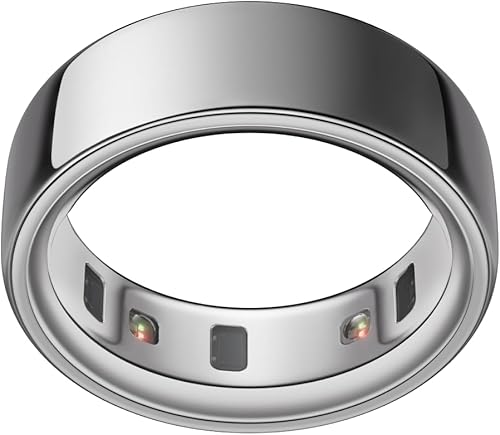
If the Oura's subscription is a dealbreaker, the RingConn Gen 2 is the most compelling answer. It delivers the category's longest rated battery — 10–12 days, with a charging case that tops it up many times over — sleep, stress, HRV, and SpO2 tracking, 100m water resistance, and notably, built-in sleep-apnea monitoring, all with no subscription, ever. It's HSA/FSA-eligible too. As an all-round value proposition, nothing else here matches it.
The honest caveat is the same one we flagged on accuracy: RingConn doesn't yet have the independent, peer-reviewed validation Oura has. The features are excellent and owner reviews are strong, but the clinical evidence base is thinner. Not ideal for anyone who needs the deepest app ecosystem or the most studied algorithms.
3. Samsung Galaxy Ring — Best for Samsung & Android
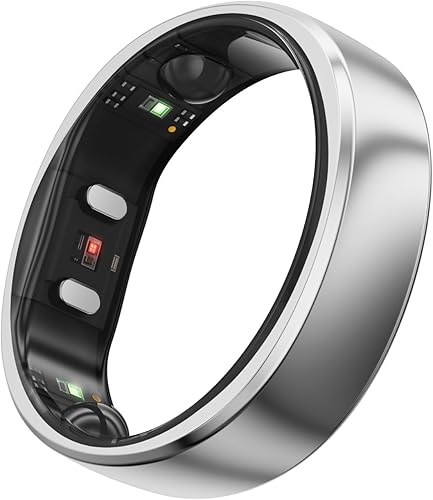
If you carry a Galaxy phone — and especially if you also wear a Galaxy Watch — the Galaxy Ring is the obvious pick. Its standout trick is the Energy Score, which uses Samsung's AI to blend data from the ring and watch, switching between sensors to save battery and giving you a single daily readiness number inside Samsung Health. No subscription, up to 7-day battery, titanium build, and 10ATM water resistance.
The limitation is firm: the Galaxy Ring is Android-only, and it's at its best inside Samsung's ecosystem specifically. Not for iPhone users at all, and somewhat underpowered if you're on Android but not in the Samsung world.
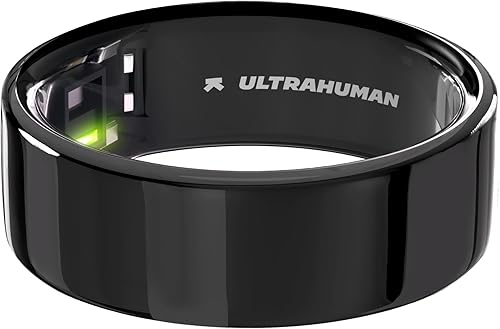
4. Ultrahuman Ring AIR — Best Subscription-Free Premium
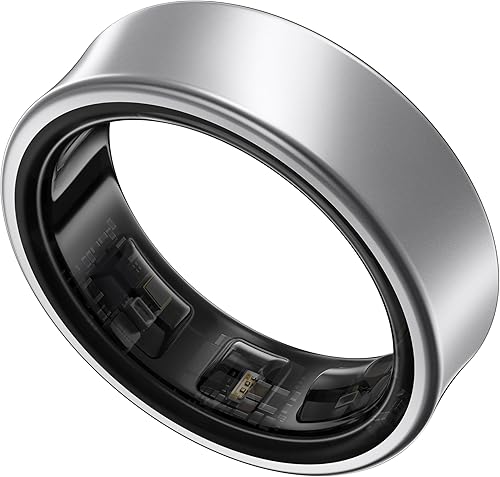
The Ultrahuman Ring AIR aims at Oura's premium positioning without the membership — full sleep, movement, recovery, HR and HRV tracking with no app fee for standard features, a lightweight titanium body, and roughly 6-day battery. Its differentiator is the broader Ultrahuman ecosystem, which extends into metabolic tracking (including continuous glucose monitoring) — interesting if you care about how food and timing affect your body, a theme we cover across our health technology hub.
Be clear-eyed, though: it's a newer platform and owner reviews are more mixed than Oura's or RingConn's, with some reports on app polish and consistency. The no-subscription promise is real and appealing; the track record is shorter. Not ideal for anyone who wants the most settled, proven option.
5. Amazfit Helio Ring — Best Budget
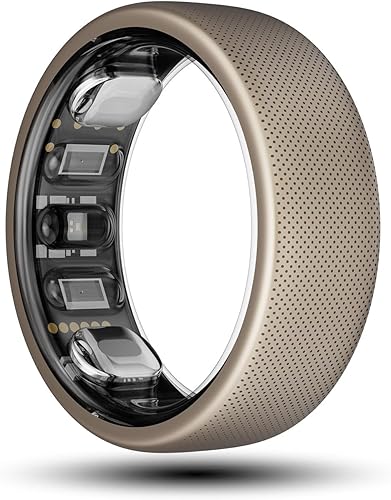
The Amazfit Helio Ring is the gentle on-ramp into smart rings: the lowest entry price here, no subscription, and a remarkably light titanium-alloy body (under 4 grams, 2.6mm thick) you genuinely forget you're wearing. It covers the essentials — sleep stages, readiness, heart rate, SpO2, stress, plus an EDA sensor for stress readings — and charges fully in well under two hours.
The compromises are exactly where you'd expect at this price: battery is the shortest of the group at around 4 days, and the metric depth and app polish trail the premium rings. Not ideal for data obsessives or anyone who hates frequent charging — but as a first smart ring without a big outlay, it does the job.

The Best Smart Ring for Women's Health
This is the category where smart rings have a genuine, physiological edge over wrist wearables — and where the right pick is clear.
Cycle tracking hinges on detecting the basal body temperature rise of roughly 0.2–0.5°C that follows ovulation. Catching a shift that small requires a sensor in steady contact with tissue, away from the shifting ambient air around a wrist. The finger delivers exactly that. A ring that reads temperature from the inside surface all night, against your own baseline, can flag the luteal-phase shift far more reliably than a watch relying on logged dates.
The Oura Ring 4 is the strongest choice. Its Cycle Insights feature combines nightly temperature with HRV and resting heart rate, and it integrates with Natural Cycles, an FDA-cleared digital contraception app — meaning the temperature data feeds a regulated fertility tool, not just a guess. The Samsung Galaxy Ring is the best Android alternative, reading overnight temperature through a Natural Cycles–based algorithm inside Samsung Health. For how wearable data connects to hormonal health across life stages — perimenopause included, where temperature dysregulation is trackable too — see our Women's Health resources.

Do Smart Rings Need a Subscription? The Real Cost
This is the single most overlooked factor in the category, and it deserves more than a footnote. A smart ring's sticker price is not its cost. Its cost is the sticker price plus however many years of subscription you'll pay.
Among our picks, only the Oura Ring 4 charges an ongoing membership — and it gates the good stuff behind it: without the membership, sleep stages, Readiness, and HRV trends disappear, leaving you with data your phone already collects for free. RingConn, Samsung, Ultrahuman, and Amazfit all include their core features outright.
Praise for a "subscription-free" ring is everywhere right now — but better than what, exactly? Better than paying a monthly fee forever, yes. That doesn't automatically make a no-subscription ring the better device — Oura still leads on validation and app quality. The point isn't that subscriptions are evil; it's that you should run the two-year total before you decide, not after. A cheaper ring with a fee can cost more than a pricier ring without one. Do the arithmetic up front. (We never publish live prices here — they change too often — so check the current figure on each listing and add up the membership yourself.)

How to Choose a Smart Ring (and the Sizing Trap)
Once you've matched a ring to your goal, four practical checks separate a good purchase from a returned one:
Always order the sizing kit first
Smart-ring sizing does not follow standard jewelry sizes, because the sensors must sit flush against the underside of your finger to read a clean signal. A loose ring gives noisy data. Every premium maker ships a free plastic sizing kit — wear the sample size for a day or two, including overnight when fingers shrink, before you commit. Skipping this is the number-one reason people are disappointed.
Match the platform to your phone
Oura, RingConn, Ultrahuman and Amazfit work with both iOS and Android. The Samsung Galaxy Ring is Android-only and best with Samsung's ecosystem. Buy the wrong one and half the value evaporates.
Decide your stance on subscriptions before you fall for the app
If a recurring fee will annoy you in month three, rule Oura out now and choose from the no-subscription field — don't get sold on the app first and resent the bill later.
Be honest about whether you'll actually use the data
A ring changes nothing by itself — it's a measurement tool, not a treatment. The person who checks their Readiness each morning and adjusts gets value; the person who buys it as a New Year's resolution and forgets it gets an expensive piece of jewelry. Not sure a ring is even the right form factor? Our health wearable finder matches you across rings, watches and bands in a few questions.
Smart rings are one of the most genuinely useful health tools to arrive in years — when matched to the right person and the right goal. Get the goal right first, and any of these five will serve you well. For the wider picture of how passive monitoring fits long-term health, the WiseGoodness platform covers the full evidence base.
Frequently Asked Questions
For sleep and resting heart rate, the well-validated rings are accurate enough to be useful. The Oura Ring is the most studied: an independent 2020 validation found a strong correlation (r=0.86) with research-grade actigraphy for total sleep time, and a 2024 multi-night study against polysomnography (96 participants, 421,045 epochs) confirmed solid sleep-stage performance. Newer rings like RingConn and Ultrahuman have far less published independent validation, so their accuracy claims rest mainly on the manufacturer's own data.
Most do not — but the most popular one does. The Oura Ring requires a paid monthly membership to unlock sleep stages, readiness, and HRV trends; without it you get little more than step counts. RingConn Gen 2, Samsung Galaxy Ring, Ultrahuman Ring AIR, and Amazfit Helio Ring all include their core features with no subscription. Over two years, that subscription difference can exceed the price of the ring itself, so factor it in before you buy.
RingConn Gen 2 leads with a rated 10–12 days per charge, and its charging case extends that further. Most rings sit in the 5–8 day range (Oura Ring 4 up to 8 days, Samsung Galaxy Ring up to 7, Ultrahuman Ring AIR around 6). The budget Amazfit Helio Ring is the outlier at roughly 4 days. Any of these comfortably beats a smartwatch's ~18 hours — a ring you never take off captures the overnight data a watch on a charger misses.
The Oura Ring 4 is the strongest choice, because cycle tracking depends on detecting the small basal body temperature rise (about 0.2–0.5°C) that follows ovulation, and the finger is a more reliable place to measure that than the wrist. Oura's Cycle Insights uses nightly temperature plus HRV and integrates with Natural Cycles, an FDA-cleared digital contraception app. The Samsung Galaxy Ring also reads overnight temperature using a Natural Cycles–based algorithm and is a strong option for Android users.
They are built for different jobs. A smart ring is a passive health monitor — no screen, no GPS, no notifications — but its multi-day battery and finger placement make it excellent for sleep, HRV, and temperature tracking worn 24/7. A smartwatch is an active, real-time device with GPS, workouts, and alerts, but its short battery makes consistent overnight tracking harder. Many people who care about recovery wear a ring 24/7 and add a watch only for workouts — see our Oura Ring vs Apple Watch comparison for that trade-off in detail.
Smart-ring sizing does not match standard jewelry sizes, because the sensors must sit flush against the underside of your finger to read a clean signal. A ring that is slightly loose produces noisier heart-rate and temperature data. Oura, Samsung, Ultrahuman, and Amazfit all ship a free plastic sizing kit so you can wear sample sizes for a day or two — including overnight, when fingers are at their smallest — before committing. Skipping this step is the most common smart-ring buying mistake.
