The best fitness tracker for most people in 2026 is the Fitbit Charge 6 — built-in GPS, a broad health suite, and the easiest app to actually live with. Serious runners should choose the Garmin Forerunner 255 (dual-band GPS, deep training data, 14-day battery, no subscription). The Amazfit Band 7 is the budget standout, the Apple Watch SE is best if you want full smartwatch features on an iPhone, and the Samsung Galaxy Fit3 is the slim, long-battery pick for Android. As always, "best" depends on your goal — so we've matched each to its buyer.
Fitness trackers are the one piece of health tech almost everyone considers — and the category where the "best" lists are most interchangeable. They tend to rank the same five gadgets in a slightly different order, assert one is "the most accurate," and never mention what independent testing actually found.
We'll take the more useful approach. WiseGoodness is research-led, not a hands-on lab (here's how we evaluate) — so instead of claiming we strapped on five bands for a year, we compared the specs that settle a purchase, grounded the accuracy question in published studies, and matched each tracker to the person it actually suits.
Because the real question isn't "which tracker is best?" It's "best at what, for whom?" A marathoner and a desk worker who wants to hit 8,000 steps need different devices. Start with your goal — the map below routes you there — then read why.
WiseGoodness · fitness tracker map
Which Fitness Tracker Fits Your Goal?
Match your top priority to the right tracker. The decider is the spec that actually settles the choice.
Decider: Built-in GPS + the broadest health suite in the friendliest app.
Decider: Dual-band GPS, training-load metrics, 14-day battery, no subscription.
Decider: Up to 18-day battery, AMOLED screen, and the lowest price here.
Decider: Full smartwatch + GPS + crash detection — at the cost of ~18-hour battery.
Decider: ~13-day battery, slim AMOLED band, deep Samsung Health integration.
Decider: For recovery scoring, see our best smart rings or Oura vs WHOOP guides.

What to Look For in a Fitness Tracker
Ignore the feature lists for a moment. Four things actually determine whether you'll be happy with a tracker a year from now:
- Built-in GPS vs phone GPS. If you run, cycle, or walk routes and want accurate distance and pace without carrying your phone, you need built-in GPS (Fitbit Charge 6, Garmin, Apple Watch SE). Budget bands like the Amazfit Band 7 and Galaxy Fit3 borrow your phone's GPS — fine if your phone's always with you.
- Battery life. This ranges wildly — from ~18 hours (Apple Watch SE) to ~18 days (Amazfit Band 7). Long battery means you actually capture sleep data, because the device isn't on a charger overnight.
- Subscription. Most trackers don't need one. Fitbit Premium is optional; Garmin, Amazfit, Apple, and Samsung charge nothing for core features. (Recovery devices like the Oura Ring and WHOOP are the exception — they do.)
- Your phone. Apple Watch SE needs an iPhone. Galaxy Fit3 is best on Samsung/Android. Fitbit, Garmin, and Amazfit play with both. Buy the wrong platform and half the value disappears.

Are Fitness Trackers Accurate?
Yes and no — and the distinction matters more than any single device choice. The honest summary: trust the heart rate, doubt the calories.
A widely cited Stanford study (Shcherbina et al., 2017) tested seven wrist wearables against medical-grade equipment. Six of seven measured heart rate within about 5% — genuinely reliable. But none estimated energy expenditure (calories) well, with errors often exceeding 20%. The study also found error rates climbed with darker skin tone and higher BMI — a limitation of wrist optical sensors that newer research guidelines (npj Digital Medicine, 2020) have echoed and pushed manufacturers to address.
So calibrate your expectations: heart-rate trends and step counts are trustworthy; GPS distance is reliable on devices with built-in GPS; and the calorie number on any tracker is a rough estimate, not a measurement. Use it to compare your own days, not as gospel. And remember — none of these is a medical device, a principle we hold across all our health technology coverage.

The 5 Best Fitness Trackers in 2026, Compared
| Tracker | Best for | GPS | Battery | Subscription |
|---|---|---|---|---|
| Fitbit Charge 6 | Best overall | Built-in | ~7 days | Optional (Premium) |
| Garmin Forerunner 255 | Runners & training | Dual-band built-in | Up to 14 days | None |
| Amazfit Band 7 | Budget | Phone GPS | Up to 18 days | None |
| Apple Watch SE | iPhone smartwatch | Built-in | ~18 hours | None |
| Samsung Galaxy Fit3 | Android, slim & long battery | Phone GPS | ~13 days | None |
1. Fitbit Charge 6 — Best Overall
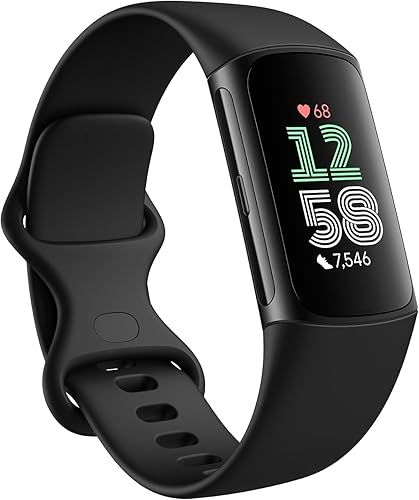
The Charge 6 remains the tracker most people should buy. It pairs built-in GPS with the broadest everyday health suite — 24/7 heart rate, SpO2, sleep stages, stress tracking, and an ECG app — inside the friendliest app in the category. It works on both iPhone and Android, and its Google integration (Maps, Wallet) adds genuine daily utility. For "I just want one good tracker," this is the answer.
The honest caveats: battery is solid but not class-leading at around 7 days, and a few deeper analytics nudge you toward optional Fitbit Premium. Not ideal for serious runners who need advanced training metrics — that's Garmin's territory.
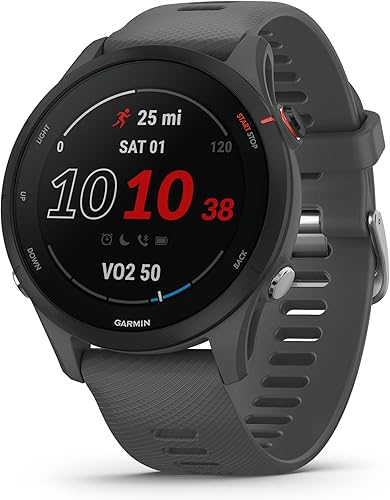
2. Garmin Forerunner 255 — Best for Runners & Training
If you train seriously — running, triathlon, structured endurance work — the Forerunner 255 is the pick. It has dual-band (multi-band) GPS for accurate pace and distance even among tall buildings or tree cover, deep training-load and recovery metrics, race predictors, and a 14-day battery that shrugs off long weeks. Crucially, all of it is included — no subscription.
The trade-offs are scope and polish: it's a focused sports watch, not a lifestyle smartwatch, and Garmin's app is powerful but less beginner-friendly than Fitbit's. Not ideal for casual users who just want steps and sleep — it's more watch than they need. See our deeper Fitbit vs Garmin breakdown if you're torn between the two.
3. Amazfit Band 7 — Best Budget
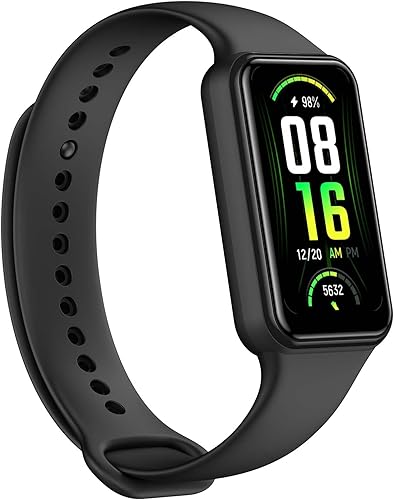
The Amazfit Band 7 is the value champion by a distance. For the lowest price here it gives you a bright 1.47-inch AMOLED display, 24/7 heart rate and SpO2 monitoring, 120+ sport modes, stress tracking, built-in Alexa, and a remarkable up-to-18-day battery — with no subscription. As a first tracker, or for anyone who refuses to spend big on a wrist gadget, it punches far above its price.
The compromises are honest and expected: no built-in GPS (it uses your phone's), and the app and metric depth trail the premium options. Not ideal for phone-free runners or data obsessives — but for everyday activity and sleep on a budget, it's unbeatable value.
4. Apple Watch SE — Best for iPhone Users
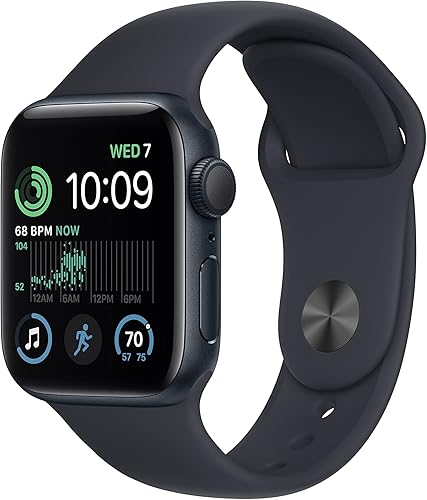
If you carry an iPhone and want your tracker to also be a wrist computer, the Apple Watch SE is the obvious choice. It does fitness well — built-in GPS, heart rate, sleep, 80+ workout types, Activity Rings — and adds everything a tracker can't: apps, calls, messages, Apple Pay, and crash detection. For most iPhone owners, it's the single most capable device on this list.
The cost is literal and practical: it's pricier than a dedicated tracker, and its ~18-hour battery means daily charging and inconsistent sleep tracking unless you build a charging habit. Not for Android users at all, and overkill if you only want health metrics — see Oura Ring vs Apple Watch for that trade-off.
5. Samsung Galaxy Fit3 — Best Slim Tracker for Android
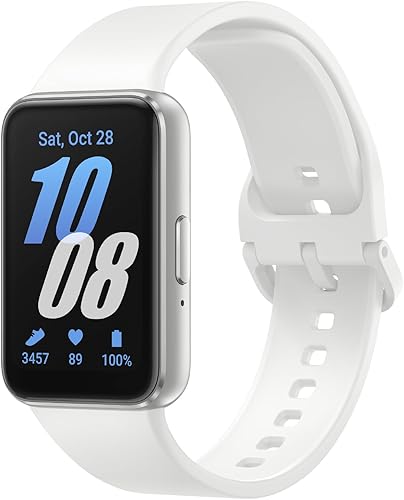
The Galaxy Fit3 is the elegant, no-fuss band for Android users — especially those in Samsung's ecosystem. It offers a slim 1.6-inch AMOLED display, 100+ workout modes, heart rate, SpO2, sleep and snore tracking, fall detection, and around 13 days of battery, all feeding cleanly into Samsung Health with no subscription. It's the lightweight middle ground between a bare budget band and a full smartwatch.
The limits: it leans on your phone's GPS, and it's at its best on Samsung specifically. Not ideal for iPhone users or runners who need onboard GPS and training depth.

How to Choose the Right One for You
Run your shortlist through three quick filters and the decision usually makes itself:
Start with your phone and your sport
iPhone + you want a smartwatch → Apple Watch SE. Serious running → Garmin Forerunner 255. Everything else, on either phone → Fitbit Charge 6. Android + slim/cheap → Galaxy Fit3 or Amazfit Band 7. That single fork eliminates most of the field.
Decide if battery life is a dealbreaker
If charging a device nightly will annoy you — or you specifically want sleep tracking — rule out the ~18-hour Apple Watch SE and lean to the multi-day options. A tracker on a charger collects no data.
Be honest about whether steps are even your goal
If what you actually care about is sleep quality and recovery rather than activity, a fitness tracker may be the wrong tool — a smart ring or recovery band does that job better. Compare them in our best smart rings guide and Oura vs WHOOP breakdown, or run the health wearable finder to match yourself across rings, watches and bands.
Any of these five is a genuinely good device. Get the goal right first, buy the one that fits it, and — the part no gadget can do for you — actually look at the data and act on it. For the wider picture of how wearables fit long-term health, the WiseGoodness platform covers the full evidence base.
Frequently Asked Questions
For most people, the Fitbit Charge 6 is the best all-round fitness tracker — built-in GPS, a broad health suite, and one of the easiest apps to use day to day. Serious runners are better served by the Garmin Forerunner 255; budget buyers by the Amazfit Band 7; iPhone users wanting smartwatch features by the Apple Watch SE; and Android users by the Galaxy Fit3.
For heart rate, mostly yes — a Stanford study (Shcherbina et al., 2017) found six of seven wrist devices measured heart rate within about 5% of an ECG. For calories burned, no: every device tested estimated energy expenditure poorly, and error rates rose with darker skin tone and higher BMI. Steps and GPS distance are generally reliable. Treat heart-rate trends and step counts as useful, and any calorie figure as a rough estimate.
Most do not. Garmin, Amazfit, Apple Watch, and Samsung include their core features with no subscription. Fitbit works without one, but Fitbit Premium unlocks deeper analytics for an optional fee. Unlike recovery devices such as WHOOP or the Oura Ring, a fitness tracker generally doesn't lock essential data behind a paywall.
Among our picks, the Amazfit Band 7 leads at up to 18 days, with the Samsung Galaxy Fit3 around 13 days and the Garmin Forerunner 255 up to 14 days. The Fitbit Charge 6 runs about 7 days. The outlier is the Apple Watch SE at roughly 18 hours — the trade-off for being a full smartwatch.
The Amazfit Band 7 is the standout budget choice. It offers a 1.47-inch AMOLED display, 24/7 heart rate and SpO2 monitoring, 120+ sport modes, built-in Alexa, and up to 18 days of battery — with no subscription. It lacks built-in GPS (it uses your phone's), but for daily activity, sleep, and heart-rate tracking on a tight budget, nothing else matches its value.
It depends on what you want. A dedicated fitness tracker focuses on health and activity with long battery life and a lower price. A smartwatch like the Apple Watch SE adds apps, notifications, calls, and a richer screen, but costs more and needs daily charging. If health tracking is the priority, a tracker is the better value; if you want a wrist computer that also tracks fitness, choose a smartwatch.